

Bodies 2004 TV series (Review)
- 4 days ago
- 5 min read

Before he became the mastermind behind the police corruption juggernaut Line of Duty, Jed Mercurio crafted what many consider to be the most honest, albeit terrifying, depiction of the British healthcare system ever televised. The Bodies 2004 TV series is a British medical drama that eschews the typical "angelic" tropes of the genre in favor of a dark, visceral, and often depressing look at life inside a failing Obstetrics and Gynaecology ward. Through the lens of the Bodies 2004 TV series, the hospital is not just a place of healing, but a battlefield of professional rivalry, systemic incompetence, and the chilling principle of "doctors looking after doctors".

Production Overview: Origins and Distribution
The Bodies 2004 TV series was produced by Hat Trick Productions for the BBC. The country of origin is the United Kingdom, and the show made its original release on the BBC Three network on June 23, 2004. While BBC Three served as the initial home to break into hour-long dramas, the series was later aired on BBC Two. The show ran for a total of three series (seasons), spanning 17 episodes.
• Series 1 (2004): Consisted of 6 episodes.
• Series 2 (2005): Expanded to 10 episodes after a co-commission by BBC Three and BBC Two.
• Finale (2006): A feature-length final episode was broadcast on December 13, 2006, to conclude the narrative after the BBC did not order a third full series.
In terms of distribution, the series reached American audiences via BBC America in 2005. It was released on DVD between late 2006 and 2007 and became available on BBC iPlayer in 2019. Notably, in 2022, Netflix began streaming the series in the UK, bringing its gritty realism to a new generation.
Synopsis and Plot: The Reality of South Central Infirmary
Set in the fictional South Central Infirmary in West Yorkshire, the Bodies 2004 TV series follows Rob Lake (Max Beesley), a specialist registrar who starts a new post in the Obstetrics and Gynaecology department. Lake initially finds himself under the guidance of consultant obstetrician Roger Hurley (Patrick Baladi), a man whose professional and friendly demeanor masks a terrifying secret: he is an incompetent surgeon who regularly bungles procedures to the detriment of his patients.
The central plot revolves around Lake’s realization that Hurley is protected by a toxic institutional culture. When an anaesthetist, Dr. Maria Orton (Susan Lynch), attempts to blow the whistle on Hurley’s negligence after a disastrous birth, she is ostracized, suffers a miscarriage due to stress, and is eventually sectioned. Lake, though haunted by his own involvement in a patient's death, finds himself trapped by hospital politics and blackmail, initially forced into a respectful but uneasy professional relationship with Hurley.
The drama escalates throughout the second series as the ward’s management prioritizes "three-star status" and public relations over patient welfare. The series concludes with a high-stakes finale where Lake, now at a University Hospital and suffering from potential Creutzfeldt–Jakob disease (contracted after Hurley accidentally cut him during a surgery), seeks final retribution against his nemesis during a complicated delivery involving Lake’s partner, Polly Grey.

Main Characters and Stars
The series is anchored by a stellar cast and directed by a rotating team of talent, including John Strickland, Richard Laxton, Jon East, Iain B. Macdonald, and Douglas Mackinnon.
• Mr. Rob Lake (Max Beesley): The protagonist and Senior House Officer whose moral compass is tested by the corruption he witnesses.
• Mr. Roger Hurley (Patrick Baladi): The primary antagonist, though Mercurio complicates this by showing him as a loving family man who genuinely believes he is trying his best despite his mounting failures.
• Sister Donna Rix (Neve McIntosh): A ward nurse involved in a sordid affair with Lake, who eventually attempts to expose the ward's failures as a journalist.
• Mr. Tony Whitman (Keith Allen): A senior consultant described as a "smug, golf-playing sleaze" with offensive slang for the female anatomy. Despite his personality, he is the most skilled surgeon in the unit, highlighting the show's theme that talent does not always equal kindness.
• Dr. Maria Orton (Susan Lynch): The tragic whistle-blower whose life is destroyed by the hospital’s "closing of ranks".
• Miss Polly Grey (Tamzin Malleson): A doctor and Lake’s partner in the final episodes.
Themes and Unflinching Realism
The "horror" of the Bodies 2004 TV series lies in its graphic realism. The surgical scenes are noted for their visceral nature, depicting procedures like uterine inversions and snapped umbilical cords with enough detail to "put David Cronenberg off his dinner". This realism extends to the "gallows humour" used by the staff, which acts as a humanizing armor against the trauma of their work.
Mercurio, who trained as a doctor himself, uses the show to critique the "target culture" of the NHS. The review of this series often highlights its depiction of "creative" reporting—where management reclassifies gurneys as beds or surgeons avoid life-saving procedures to stay within monthly budgets. It suggests the medical service is populated by normal people susceptible to laziness and arrogance, rather than the "angels" often depicted in television.

Critics Response and Accolades
The Bodies 2004 TV series received immense critical acclaim. The Times ranked it ninth in its "Shows of the Decade" in 2009, and The Guardian placed it at number twenty on its list of "The Greatest Television Dramas of All Time" in 2010. Medical professionals have praised it as the most honest depiction of hospital life ever produced.
The series also secured several prestigious accolades:
• RTS Programme Awards: Won Best Drama Series in 2006 and was nominated in 2005.
• BAFTA Television Awards: Nominated for Best Drama Series in 2004 and 2005.
• RTS Craft & Design Awards: Won multiple awards for Make Up (Davy Jones and Lin Davie) and Visual Effects (Neill Gorton and Millennium FX) for their incredibly lifelike prosthetic effects.
Spin-offs and Adaptations
While there are no direct spin-offs, the series is an adaptation of Jed Mercurio’s 2002 novel of the same name. It also shares a narrative universe with Mercurio’s earlier work; the character Sir Paul Tennant (Nicholas Palliser) appears in both Bodies and the 1994 medical drama Cardiac Arrest.
🔖 Key Takeaways
🗝️ Genre & Creator: A British medical drama created by Jed Mercurio, based on his own novel.
🗝️ Core Conflict: Follows the intense, moral struggle of Rob Lake as he confronts the dangerous incompetence of consultant Roger Hurley.
🗝️ Realism: Famous for its graphic, "horror-movie level" surgical scenes and its cynical take on hospital management.
🗝️ Legacy: Recognized by The Guardian and The Times as one of the greatest TV dramas ever made.
🗝️ Awards: Multiple RTS wins for Best Drama and Makeup/Special Effects.
🗝️ Availability: Originally on BBC; currently available for streaming on Netflix (UK) and BBC iPlayer.
🌐 External sources

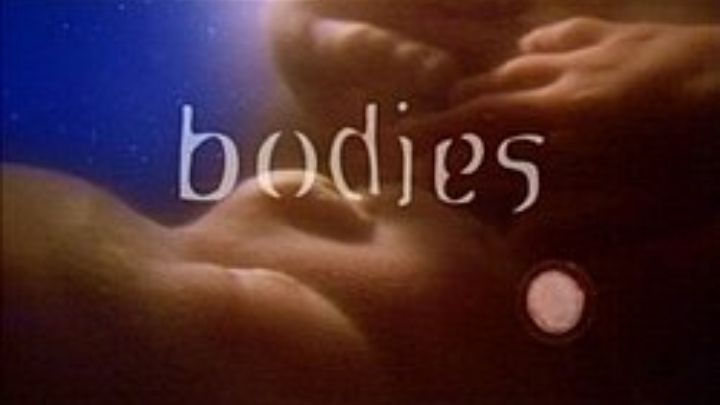

Keywords: Bodies 2004 TV series
Bodies 2004 TV series


Comments