

FDA Approves New Wearable Device for Pancreatic Cancer Treatment
- Feb 13
- 2 min read
Updated: Feb 16

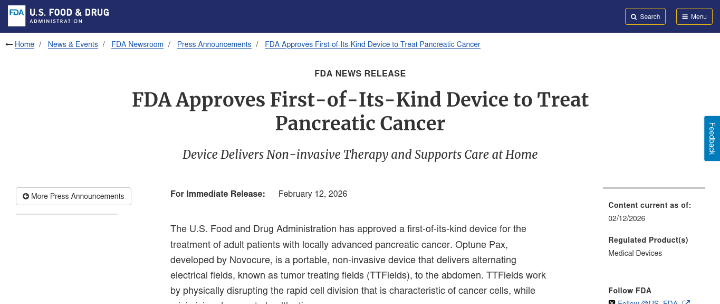
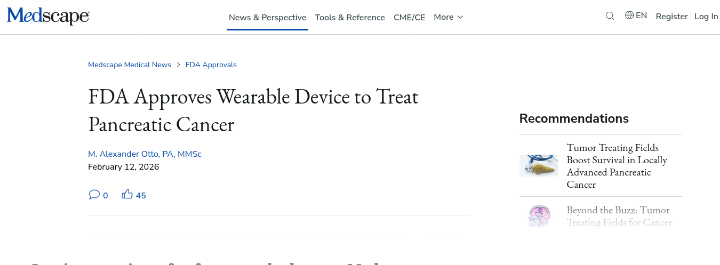
On February 12, 2026, the U.S. Food and Drug Administration (FDA) announced the landmark approval of Optune Pax, a first-of-its-kind wearable device designed to treat adult patients with locally advanced pancreatic cancer. Developed by Novocure, the portable system represents the first new therapeutic approval for this condition in nearly 30 years.
The device operates by delivering tumor treating fields (TTFields)—low-intensity, alternating electrical fields—directly to the abdomen. These fields are designed to disrupt the rapid cell division characteristic of cancer cells, leading to cell death while minimizing damage to surrounding healthy tissue. Patients administer the therapy by wearing electrically insulated adhesive patches connected to a battery-powered generator, which is carried in a specially designed bag.
The FDA’s decision was based on the PANOVA-3 clinical trial, which randomized 571 patients to receive either standard chemotherapy alone or chemotherapy in combination with Optune Pax. Results indicated that adding the device to the standard of care improved median overall survival to 16.2 months, compared to 14.2 months for those receiving only chemotherapy. Furthermore, pain-free survival was significantly extended to 15.2 months in the treatment group, nearly double the 9.1 months seen in the control group.
FDA Commissioner Marty Makary, M.D., emphasized that this approval aligns with the agency’s “Home as a Health Care Hub” initiative, aiming to provide innovative treatments that fit into a patient's daily life. While the therapy carries a monthly cost of approximately $21,000, it allows patients to receive continuous treatment while maintaining normal daily activities. The most common side effect reported was localized skin reactions under the adhesive patches.
Pancreatic cancer remains one of the most aggressive diseases, accounting for roughly 3.3% of all new cancer cases but a disproportionately high number of deaths due to late detection and limited options. This approval provides a long-awaited non-invasive alternative for the estimated 15,000 patients eligible for the treatment in the U.S..
🔖 Sources

Keywords: Wearable Device for Pancreatic Cancer Treatment
Wearable Device for Pancreatic Cancer Treatment


Comments