

Grey's Anatomy TV Series Medical Review (S1E1 Review)
- Feb 24
- 7 min read
Welcome to the arena, colleagues. Whether you’re a "gunner" like Cristina Yang or just trying to survive your first shift without earning the nickname "007," medicine is a game of high stakes and even higher pressure. In our world, a "Hard Day’s Night" isn't just a Beatles song; it's a 48-hour marathon where one missed detail in a patient history can be the difference between a scrub-in and a "code blue."
During this rotation's first shift, the interns were hit with everything from "mystery" seizures in a 15-year-old pageant queen to the crushing reality of a "lost" coronary bypass. We saw the dangers of diagnostic tunnel vision, the importance of nurse-physician collaboration (even if Alex Karev hasn't learned that yet), and the somber necessity of long-term care for the giants of our field. Let’s head to the whiteboard for rounds.

Subarachnoid Hemorrhage
(Secondary to Ruptured Aneurysm)

Diagnosis
Subarachnoid Hemorrhage (SAH) / Ruptured Cerebral Aneurysm.
Definition
An SAH is life-threatening bleeding into the subarachnoid space—the area between the arachnoid membrane and the pia mater surrounding the brain. Most non-traumatic SAHs are caused by a ruptured berry aneurysm. Manifestations often include the classic "thunderclap headache," meningism, and seizures. Prognosis is guarded; nearly 50% of patients suffer permanent neurological deficits or death.
Patient
Katie Bryce
Case Summary
A 15-year-old female presented with new-onset grand mal seizures that were refractory to standard anticonvulsants. Initial CT and labs were "clean," leading to a diagnostic stalemate. The "detective work" revealed a minor fall during gymnastics rehearsal weeks prior. An angiogram eventually confirmed a "one-in-a-million" minute bleed.
Care Team
Dr. Derek Shepherd (Attending Neurosurgeon)
Meredith Grey (Intern)
Cristina Yang (Intern)
Treatment
Medical stabilization with Lorazepam, Diazepam, and Phenobarbital; definitive surgical intervention via an aneurysm clip.
What They Did Wrong
Initial Diagnostic Tunnel Vision: The team initially focused only on common causes for seizures in a 15-year-old, such as drugs or infection. They nearly missed the diagnosis because her CT scan appeared "clear" or "pure".
Inadequate Patient History: The interns failed to initially uncover a key piece of history—a minor fall during gymnastics—until Meredith recalled it later .
Delayed Recognition of Status Epilepticus: Katie experienced multiple grand mal seizures and eventually coded while under intern supervision because she was not responding to standard doses of Diazepam and Lorazepam.
What They Did Right
Aggressive Diagnostics: Dr. Shepherd ordered a "shotgun" approach, including a CT, CBC, Chem-7, and tox screen to rule out all possibilities.
Refinement of Imaging: When symptoms didn't match the clear CT, they performed an angiogram. This remains the gold standard for identifying minute bleeds or aneurysms that a standard CT might miss.
Life-Saving Intervention: Use of an aneurysm clip to stop the subarachnoid hemorrhage is the standard surgical treatment to prevent re-bleeding.

Coronary Artery Disease
(End-Stage)
Diagnosis
Severe Coronary Artery Disease / Heart Failure.
Definition
The narrowing or blockage of the coronary arteries, usually caused by atherosclerosis. When the damage is extensive, the heart muscle (myocardium) becomes too weak to pump effectively. A "failed bypass" occurs when the target vessels or the myocardium itself cannot support a return to independent function after being on the heart-lung machine.
Patient
Tony Savitch
Case Summary
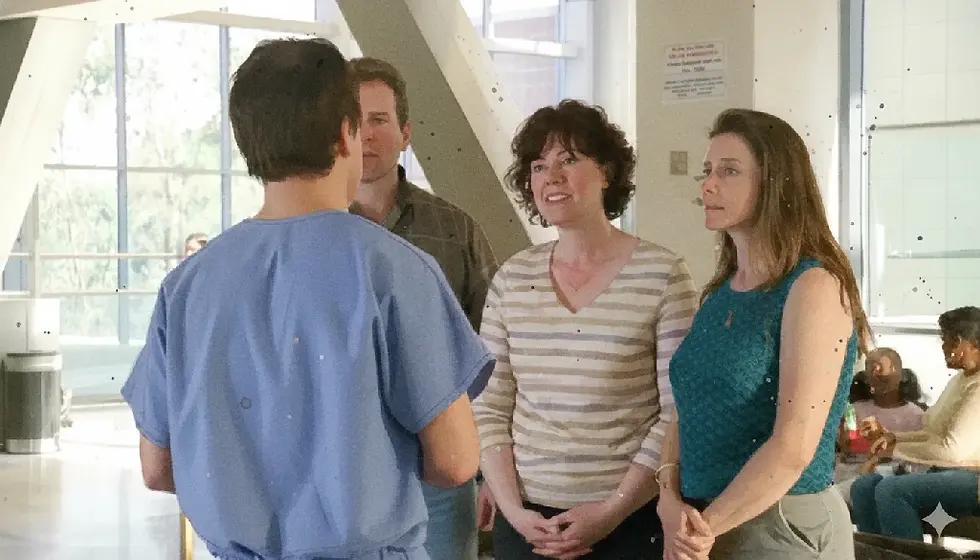
Scheduled for a routine bypass, Tony was optimistic. However, intraoperatively, Dr. Burke discovered the myocardial damage was too extensive. The patient could not be "weaned" from the bypass machine and was pronounced dead in the OR.
Care Team
Dr. Preston Burke (Attending Cardiothoracic)
George O'Malley (Intern)
Treatment
Attempted Coronary Artery Bypass Graft (CABG).
What They Did Wrong
Unprofessional Guarantees: George O'Malley promised the patient and his wife that he would be "fine" and "okay". In modern medicine, promising a specific outcome is a major ethical and legal error, as all surgery carries risk.
Inappropriate Intern Responsibility: George was assigned to deliver the news of the patient's death alone as a "punishment" for his promise, rather than having a senior surgeon lead the difficult conversation .
What They Did Right
Intraoperative Decision Making: Dr. Burke correctly identified that the heart damage was too extensive for the bypass to be successful and made the difficult call to let the patient go rather than prolonging a futile procedure .
Realistic Risk Assessment: Despite the intern's promises, the attending (Burke) did explicitly mention to the patient that there are always risks in surgery .

Pulmonary Embolism
Diagnosis
Pulmonary Embolism.
Definition
A blockage in one of the pulmonary arteries in the lungs, usually caused by blood clots that travel to the lungs from deep veins in the legs (DVT). Key manifestations include sudden shortness of breath, chest pain, and fever. It is a common and lethal post-operative complication.
Patient
"Alex's Patient" (4-B)
Case Summary
A post-op patient presented with fever and shortness of breath. Intern Alex Karev reflexively diagnosed "post-op pneumonia" without performing a full workup. Meredith Grey correctly identified the "Five W's" of post-op fever (Wind, Water, Wound, Walking, Wonder drugs) and pointed to "Walking" (PE) as the culprit.
Care Team
Alex Karev (Intern)
Meredith Grey (Intern)
Dr. Richard Webber (Attending General Surgeon)
Treatment
Oxygen (O2), Heparin (anticoagulation), Spiral CT for diagnosis, and consultation for an IVC filter.
What They Did Wrong
Diagnostic Laziness/Bias: Alex Karev assumed the patient had post-op pneumonia based only on a fever and shortness of breath, dismissing the nurse's concerns that the patient wasn't improving .
Ageism in Treatment: Alex dismissed the patient's lack of response to antibiotics by stating "she's old," failing to consider that her age made her more vulnerable to other complications.
Failure to Order Tests: He ordered antibiotics without confirming the diagnosis through imaging or labs.
What They Did Right
Differential Diagnosis (Meredith): Meredith correctly identified the "Five W's" of post-op fever (Wind, Water, Wound, Walking, Wonder drugs) .
Standard PE Protocol: The recommended treatment plan—Spiral CT, V/Q scan, Heparin, and an IVC filter—remains the standard clinical pathway for treating a pulmonary embolism today .

Acute Appendicitis

Diagnosis
Appendicitis.
Definition
Inflammation of the appendix, often due to a blockage in the lining of the appendix that results in infection. If not treated via surgical removal (appendectomy), the appendix can rupture, leading to peritonitis.
Patient
Unnamed Patient ("The Appendectomy").
Case Summary
A standard appendectomy was assigned to George O'Malley to test his "promise." During the procedure, George accidentally ripped the cecum while attempting to ligate the appendix, leading to a "bleeder" and stool contamination in the cavity.
Care Team
Dr. Preston Burke (Attending)
George O'Malley (Intern)
Treatment
Appendectomy (started by O'Malley, completed by Burke after complications).
What They Did Wrong
Surgical Competence: George O'Malley was pressured into a "McBurney" incision and accidentally ripped the cecum during the appendectomy, causing a "bleeder" and stool to leak into the cavity .
Performance Pressure: The "007" culture (license to kill) and the practice of attendings "terrorizing" one intern to make others fall in line is considered toxic and counterproductive to patient safety in modern surgical residency programs.
What They Did Right
Attending Supervision: Dr. Burke remained in the room and immediately took over the surgery when the complication occurred, preventing the patient from bleeding to death .

Alzheimer’s Disease
(Early-Onset/Advanced)
Diagnosis
Alzheimer's Disease.
Definition
A progressive neurodegenerative disease that destroys memory and other important mental functions. It is the most common cause of dementia. While manifestations start with mild forgetfulness, advanced stages involve total loss of cognitive function and the inability to carry out simplest tasks. There is currently no cure.
Patient
Ellis Grey.
Case Summary
The legendary Dr. Ellis Grey is revealed to be a resident of a long-term care facility, no longer recognizing her own daughter and believing she is still a practicing surgeon.
Care Team
Long-term care facility staff
Treatment
Supportive, long-term nursing care.

Bacterial Infection
Diagnosis
Unspecified infection (requiring IV antibiotics).
Definition
Severe infections often require long-term or high-volume intravenous antibiotics. In patients with "junky veins" (poor peripheral venous access), a Central Venous Catheter (Central Line) is required to deliver medication safely into a large vein.
Patient
Mr. Jones.
Case Summary
Izzie Stevens struggled to establish IV access for antibiotics. She eventually had to wake the "Nazi" (Dr. Bailey) to assist with a central line procedure.
Care Team
Dr. Miranda Bailey (Resident)
Izzie Stevens (Intern)
Treatment
Central Line placement and IV Antibiotics.

Screening and Routine Diagnostics
Diagnosis
Various (Internal screening).
Definition
The digital rectal exam (DRE) is a standard diagnostic tool used to check for gastrointestinal bleeding, prostate issues, or other abnormalities in the lower GI tract.
Patient
Multiple Patients ("The Rectal Exams").
Case Summary: As the "bottom of the surgical food chain," Izzie Stevens spent her first shift performing seventeen rectal exams on various patients.
Care Team
Izzie Stevens (Intern)
Treatment
Diagnostic screening (DRE).

🔖Key Takeaways
🗝️ Combat Diagnostic Tunnel Vision: As seen with Katie Bryce’s "one-in-a-million" subarachnoid hemorrhage, a "clean" CT scan isn't a definitive green light. When symptoms persist, clinicians must dig deeper into patient history—like a forgotten gymnastics fall—to find the hidden truth.
🗝️ Utilize the "Five W’s" of Post-Op Fever: To avoid Alex Karev’s mistake of misdiagnosing a Pulmonary Embolism (PE) as pneumonia, always run through the standard checklist: Wind (Atelectasis), Water (UTI), Wound (Infection), Walking (DVT/PE), and Wonder drugs.
🗝️ The Danger of "Unprofessional Guarantees": George O’Malley’s promise that a patient would be "fine" highlights a major ethical breach. In modern medicine, transparency regarding surgical risk is mandatory; providing false certainty creates legal liability and emotional trauma for families.
🗝️ The "Detective Work" is Life-Saving: High-tech interventions like aneurysm clips and bypasses only work if the preliminary "scut work"—such as the 17 rectal exams performed by Izzie Stevens or the detailed histories taken by Meredith—correctly identifies the underlying pathology.
🗝️ Surgical Competence vs. Performance Pressure: The "007" culture (a license to kill) demonstrates how toxic environments lead to technical errors, like a ripped cecum during a routine appendectomy. Modern care emphasizes attending supervision and psychological safety over "terrorizing" residents.
Keywords: Grey's Anatomy Medical Review S1E1
Grey's Anatomy Medical Review S1E1





Comments