

Hidden Neuroprotective Microglia Switch Discovered in Alzheimer's Fight
- Dec 1, 2025
- 2 min read
Updated: Dec 7, 2025

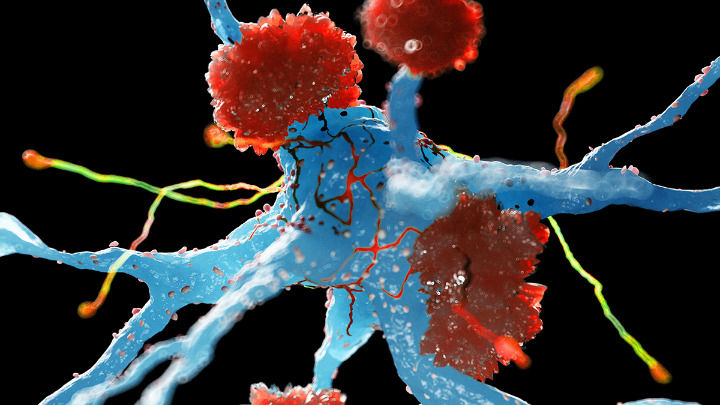
An international team of scientists has uncovered a powerful, hidden defense system in the brain that could offer a new pathway to slow the progression of Alzheimer’s disease. The discovery centers on microglia, the brain’s resident immune cells, which have long been known to play a complex, dual role in the disease—sometimes clearing toxic buildup and sometimes fueling harmful inflammation.
New research, conducted using Alzheimer's mouse models, human cells, and donated human brain tissue, shows that microglia can be coaxed into a protective state. "Microglia are not simply destructive responders in Alzheimer's disease—they can become the brain's protectors," explained Anne Schaefer, a senior author of the research.
The key to this protective shift lies in a specific molecular pathway dubbed the PU.1-CD28 axis. Researchers found that when levels of a molecule called PU.1 are reduced, microglia shift into a protective mode. This change activates the production of certain lymphoid immunoregulatory receptor proteins, including high expression of CD28.
Although this protective subset of microglia appears in relatively small numbers, they have a powerful influence across the brain. This subset effectively helps to calm harmful inflammation, supports cognitive abilities, and improves survival in mice. Critically, when researchers removed CD28 from this group of cells in mice, inflammation rose sharply, and amyloid plaques developed more quickly, demonstrating that CD28 is essential for their helpful actions. The low-PU.1 state also prevented the spread of the toxic tau protein and compacted amyloid plaques into less damaging forms.
The discovery also highlights unexpected parallels between the brain's immune system and the general immune system found in the rest of the body. Molecules like CD28, previously known for their roles in B and T lymphocytes, were shown to regulate microglial activity. Alexander Tarakhovsky noted that this highlights a "shared logic of immune regulation across cell types".
Furthermore, the findings provide a mechanistic explanation for existing genetic clues. Earlier studies identified a common variant in the gene responsible for PU.1 production (SPI1) that is associated with a lower risk of developing Alzheimer's. These new results clarify why lower PU.1 levels are linked to reduced Alzheimer's risk.
Overall, the identification of the PU.1–CD28 axis emphasizes the promise of developing treatments that specifically target microglia in order to alter the course of Alzheimer's disease. Harnessing this pathway could allow scientists to reprogram the brain's own immune defenses to fight neurodegeneration.
🔖 Sources


Keywords: Neuroprotective Microglia
Neuroprotective Microglia


Four years ago, my husband was diagnosed with IPF (Idiopathic Pulmonary Fibrosis), a moment that changed our lives significantly. For more than two years, he followed his prescribed medications and attended regular medical checkups. Despite this, his symptoms persisted, and we remained concerned about his overall health. He struggled with low energy, frequent discomfort, and the emotional stress that came with ongoing uncertainty.In search of additional support, we decided last year to explore a herbal treatment program offered by NaturePath Herbal Clinic. We approached it cautiously and without high expectations. Over time, however, we began to notice encouraging changes. His tiredness eased, his digestion became more stable, and he appeared stronger and more at ease overall. Little by little, his…