

Max's Medical Drama The Pitt is Revolutionizing Real-Time Storytelling
- Nov 29, 2025
- 6 min read

The medical drama genre is popular, but it can often become formulaic. Yet, Max's brand-new medical drama, The Pitt, has successfully grabbed the attention of audiences, critics, and even medical professionals due to its unique premise and unflinching realism. The show centers on the emergency department (ER) of a hospital in Pittsburgh, Pennsylvania, nicknamed "The Pitt" due to its location and chaotic energy. It is often regarded as one of the most medically accurate hospital shows currently available. The Pitt follows doctors at various stages of their careers as they work to save lives, while simultaneously dealing with unfair hospital bureaucracy and dark societal issues plaguing the community.
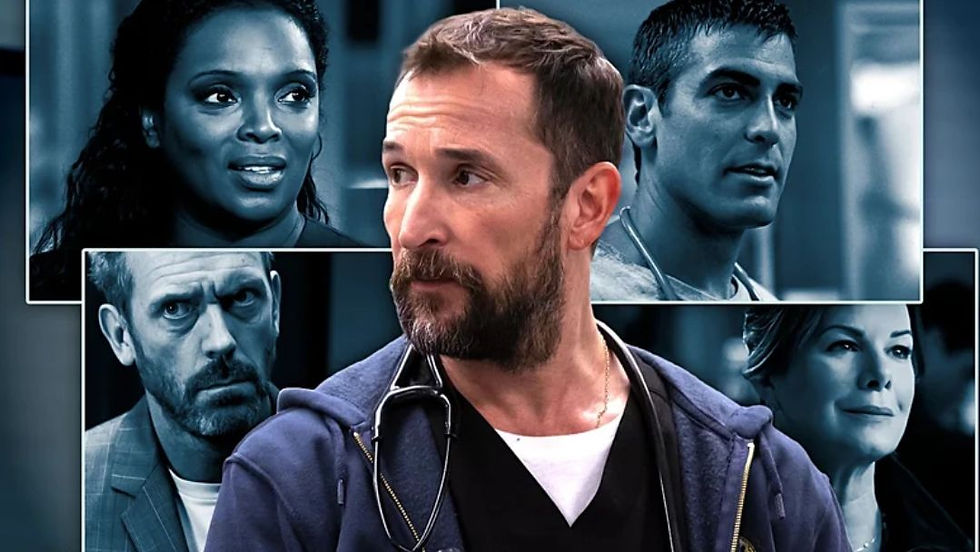
Crucially, the series stars Noah Wyle as Dr. Michael 'Robby' Robinavitch, the chief attending physician of the ER. Wyle's involvement, alongside the influence of executive producer John Wells, immediately links this Max's Medical Drama to the rich legacy of classic medical television. The show’s unique structure, commitment to tackling serious issues like the lasting impact of the COVID-19 pandemic, and its fast-paced atmosphere prove that when the medical drama formula works, it "really works".

The Real-Time Revolution: Structure and Stakes
What truly sets The Pitt apart in the crowded landscape of medical shows is its innovative use of real-time storytelling. The show's entire first season takes place over the course of a single 15-hour shift. Every single episode represents one hour of that shift. This structural choice is a defining characteristic of this Max's Medical Drama.
This premise immediately draws comparisons to the riveting thriller 24, which followed counterterrorism agent Jack Bauer. While 24 covered a full day per season (with each episode covering one hour), the approach to storytelling and the use of runtime are similar to The Pitt. This high-speed framework keeps audiences on the edge of their seats.
The fast pace and high stakes allow The Pitt to successfully showcase the overwhelming energy of a busy emergency department. This atmosphere of intense, high-pressure workplace drama is also shared with non-medical shows like The Bear. While The Bear focuses on chefs fighting to survive in a cutthroat business, it puts its characters "right on the edge of success or failure," similar to how The Pitt shows doctors huddled around a patient, racing against the clock. The large ensemble cast of The Pitt ensures there is always "something interesting happening on-screen," intensifying the relationship dynamics amid the constant chaos.
Honoring the Heritage: ER and the Classic Template
The Pitt is not an isolated phenomenon; it exists as the latest entry in a long line of groundbreaking medical series. The show would not have been possible without the groundwork laid by earlier programs.
The Enduring Influence of ER
The most immediate predecessor to this Max's Medical Drama is arguably ER. ER, which ran for 15 seasons, was created by Michael Crichton, who drew on his own experience working in the ER during his medical training to bring a sense of realism to the show. The series was a huge success from the start and was one of the first medical shows to go mainstream. ER originated the exciting trauma scenes that now appear ordinary in The Pitt. The two shows are inextricably linked: ER was a John Wells project, and Wells now acts as an executive producer on The Pitt. Furthermore, Noah Wyle, who plays the weary Dr. Robby in The Pitt, famously starred in all 15 seasons of ER as the character Dr. John Carter.
Before ER, the 1982 series St. Elsewhere helped establish the modern template for medical dramas. St. Elsewhere garnered serious attention by moving away from romanticizing doctors and instead showing the reality of working in a hospital, where doctors could make mistakes and be negatively impacted by the trauma they witnessed. This realism, where the doctors are complex, three-dimensional characters with engaging personal lives, paved the way for the complex narratives found in The Pitt and ER.
The System Under Siege: Bureaucracy and Post-Pandemic Reality
Beyond the fast-paced trauma scenarios, The Pitt delves into complex systemic issues that ground the drama in harsh reality. The show "refuses to shy away" from how the COVID-19 pandemic continues to impact an excessively burdened system. It features an underlying storyline about the effects of COVID on the hospital and its personnel. For viewers interested in this high-stakes fear, the 2011 movie Contagion, which rose in popularity during the pandemic due to its relatable themes of disease, shares thematic ties with The Pitt.
A crucial theme addressed by this Max's Medical Drama is the pervasive problem of unfair hospital bureaucracy. This is a "very real problem that all audiences should know more about". Other series have similarly critiqued the system:
• The Resident explicitly focuses on the dark underbelly of the healthcare industry, examining insurance and corruption, signaling that it stood out from other medical dramas that rarely touched on these issues.
• The documentary Sicko (2007) investigated the U.S. healthcare system, shining a spotlight on real patients denied care due to "red tape or financial issues," echoing the bureaucratic concerns in The Pitt.
• This Is Going to Hurt mirrored The Pitt by showing the "lack of support" doctors experience, reflecting Dr. Robby's confrontations with administration over resources.
• New Amsterdam offers a slightly more optimistic take, focusing on a medical director determined to make positive changes and break through the bureaucracy that often hampers efforts.
The Scarcity and Chaos of Code Black
The focus on an overwhelmed system is sharply illuminated through the connection to Code Black. The concept originated in a 2013 documentary that followed residents through America's busiest emergency department, where resources were spread thin. The documentary showed first-hand the "trials and tribulations of emergency doctors," offering the closest viewers can get to the truth about emergency medicine.
The fictional CBS series, based on the documentary, debuted in 2015 and tackled the same themes, depicting how difficult working in the ER gets when it is particularly busy. If The Pitt deals with the fallout of the COVID-19 pandemic, then Code Black was a "canary in the coal mine," trying to warn viewers of how quickly hospitals could become overwhelmed by such events, a reality now faced by the characters in The Pitt.

Beyond the ER: Different Approaches to Medical Drama
While The Pitt succeeds through realism and intensity, other series provide complementary viewing experiences by focusing on specific character archetypes or unique scenarios.
For example, House M.D. stands apart by being structured more as a mystery series. Dr. Gregory House acts as a detective, observing clues and patients' mannerisms to arrive at the correct diagnosis for baffling medical cases. House is often prickly and perceived as egotistical, much like certain characters in The Pitt, yet he remains committed to patient care.
Other medical shows explore different genres entirely. SH***, though a sitcom, skillfully wove in dark subject matter and offered thoughtful commentary on morality during wartime. Similarly, Nurse Jackie uses dark comedy to take aim at the issue of addiction plaguing far too many in the medical industry, a subject matter that requires complexity and nuance.
Finally, for viewers who appreciate the dedication and heroism of the doctors in The Pitt, the movie Awakenings (1990), based on a true story, follows a determined doctor in the 1960s fighting to save forgotten catatonic patients, demonstrating passion and heart in the face of institutional doubt. Meanwhile, historical dramas like The Knick take viewers back to the early 1900s, showcasing pioneering surgical techniques at a time of limited medical understanding, often requiring the surgeons to be as innovative as they are dedicated.
By synthesizing the high-octane procedural pace of the past with a sophisticated, real-time critique of the modern healthcare system, Max's Medical Drama, The Pitt, truly sets a new standard for intensity and authenticity.
🔖 Key Takeaways
🗝️ Real-Time Storytelling: The Pitt utilizes a unique and intense real-time storytelling format, dedicating each episode to one hour of a single 15-hour shift, mirroring the structural tension of shows like 24 and The Bear.
🗝️ The ER Connection: The show is deeply connected to the legacy of ER, sharing executive producer John Wells and starring Noah Wyle, who was a pivotal cast member in the classic series.
🗝️ Systemic Critique: The Pitt is highly praised for its commitment to reality, tackling pressing real-world issues such as crippling hospital bureaucracy and the ongoing impact of the COVID-19 pandemic on the burdened healthcare system.
🗝️ Precursor Warning: The show's theme of overwhelmed resources connects directly to Code Black, a series based on a documentary that served as a precursor, warning of how quickly emergency departments can become understaffed and chaotic.
🗝️ Pioneering Legacy: The Pitt stands in the tradition of groundbreaking series like St. Elsewhere, which established the contemporary medical drama template by showing the raw, non-romanticized reality of working in a hospital.
🌐 External sources


Keywords: Max's Medical Drama
Max's Medical Drama


Four years ago, my husband was diagnosed with IPF (Idiopathic Pulmonary Fibrosis), a moment that changed our lives significantly. For more than two years, he followed his prescribed medications and attended regular medical checkups. Despite this, his symptoms persisted, and we remained concerned about his overall health. He struggled with low energy, frequent discomfort, and the emotional stress that came with ongoing uncertainty.In search of additional support, we decided last year to explore a herbal treatment program offered by NaturePath Herbal Clinic. We approached it cautiously and without high expectations. Over time, however, we began to notice encouraging changes. His tiredness eased, his digestion became more stable, and he appeared stronger and more at ease overall. Little by little, his…