

Nurses Who Kill (review)
- Jan 7
- 5 min read

The medical profession is built upon an inherent foundation of trust, where patients place their lives in the hands of caregivers during their most vulnerable moments. However, the British true crime documentary "Nurses Who Kill" pulls back the curtain on a terrifying reality: the rare but devastating instances where that trust is weaponized. By examining some of the most infamous cases in medical history, the series provides a psychological and forensic autopsy of healthcare workers who chose to end lives rather than save them. This blog post explores the intricate details of the series, from its production background to the harrowing individual stories that have captivated and horrified audiences worldwide.
Series Overview and Production Details
"Nurses Who Kill" is a United Kingdom production that first debuted to audiences in the mid-2010s. While some sources indicate a start date as early as 2014, the official UK release date is frequently cited as October 12, 2016. The series was originally brought to viewers via the Sky network and STV, and it has since seen wider distribution on platforms like Sky Go, Apple TV, and Netflix.
The show is structured as a documentary series consisting of at least three seasons with a total of 31 episodes, each typically running for about 44 minutes. Produced by Firstlook TV, the series focuses on high-profile cases involving medical professionals, though viewers have noted that the show occasionally broadens its scope to include paramedics and home carers.

The Experts and Stars
Unlike traditional scripted dramas, the "stars" of this series are the professional contributors who dissect the crimes. Key recurring experts include:
• Jane Monckton-Smith: A renowned criminologist.
• Ellie Cannon: A General Practitioner (GP) providing medical context.
• Donna Youngs: A forensic psychologist who delves into the killers' motives.
• Sarah Jarvis: A GP who offers medical commentary.
• Colin Sutton: A former Police Investigator who provides a law enforcement perspective.
These experts work alongside other clinical psychologists and medical commentators like Christian Jessen and Dee Anand to explain how these "Angels of Death" managed to evade detection for so long.
Plot and Synopsis: The Mechanics of Murder
The core plot of "Nurses Who Kill" revolves around the analysis of real-life murderous actions committed by medical staff. The synopsis of the show highlights the use of never-before-seen evidence and interviews with journalists and psychologists to decipher why these individuals targeted vulnerable people. A recurring theme throughout the series is the "double life" many of these killers led, using their expert medical knowledge to cover their tracks or manipulate the circumstances of their victims' deaths.
The series explores various motives, ranging from financial gain and heroin addiction to more complex psychological needs, such as an obsession with being hailed as a hero after "saving" a victim from a self-created crisis.
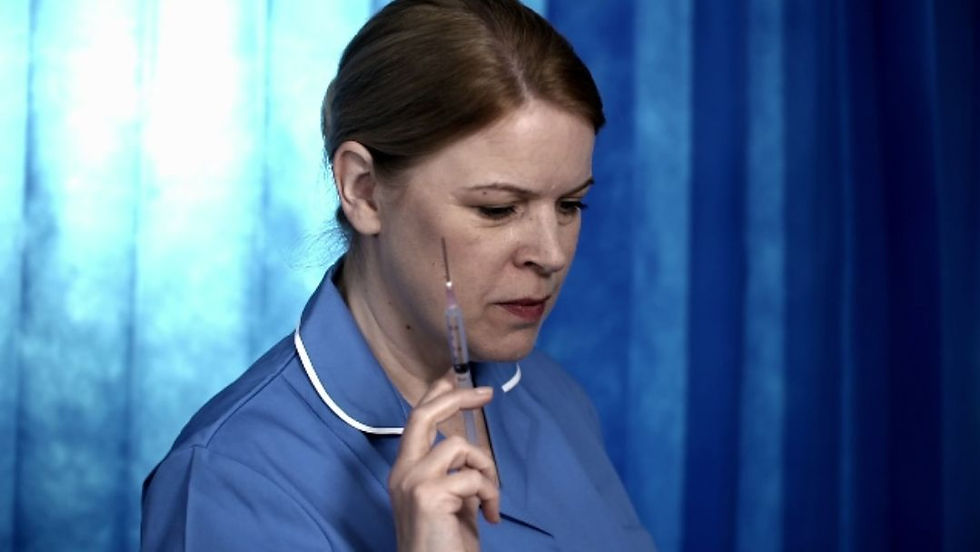
Profile of the Killers: Main Case Descriptions
The "characters" featured in the series are real-life individuals whose crimes shocked the public. Several episodes highlight specific, chilling accounts:
• Beverley Allitt and Victorino Chua: The series analyzes these high-profile cases to understand the psychological profiles of those who kill in clinical settings.
• Karen Pedley: Hailed as a hero after saving her family from a fire, she became obsessed with recreating that glory, leading to a series of dangerous actions.
• Sandra Weir: A caregiver for 82-year-old Mary Logie, Weir stole from the elderly woman to fund a heroin addiction before turning to violence.
• Paul Novak: A New York paramedic who appeared to have a "good life" following his wife's death, until the truth behind his lavish lifestyle and his wife's passing came to light.
• Thomas Dunkley: The "right-hand man" to a paralyzed former boxer, Shaun Cummins. Debt and dissatisfaction drove Dunkley to commit a heinous act against the man he was supposed to support.
• Beverley James: Led a double life as a carer and a sex worker, eventually murdering a frail woman, Harriet Davison, for money.
• Thelma Purchase: A carer who gained the trust of Greg Baker, a man with muscular dystrophy. Despite his generosity toward her and her family, she murdered him for financial gain.
• Marie Whiston: A nurse whose husband died unexpectedly; an autopsy later revealed high levels of insulin in his body, pointing to a calculated murder.
• Alison Firth: A nurse who resorted to murder because she could no longer cope with the round-the-clock care required by her 84-year-old patient, Alice Grant.

Distribution and Global Reach
The series has achieved significant international distribution. Beyond its original UK broadcast, it is available across Africa, the Middle East, India, Asia Pacific, Europe, Latin America, and North America via Apple TV and other streaming services. This wide availability has allowed a global audience to study the failures within various healthcare systems that allowed these crimes to occur.
Critical Response and Accolades
The critical response to "Nurses Who Kill" is mixed, holding an IMDb rating of 5.8/10.
• Positive Feedback: Some viewers find the series addictive and informative, noting that it teaches a "good lesson" about the medical system and the psychological makeup of those who justify their fantasies through murder.
• Criticisms: Several reviews point to the series being repetitive, with the same dramatic reconstructions and sentences used multiple times within a single episode. Others criticize the show for labeling non-nurses (like carers or EMTs) as "nurses," arguing this misrepresents the professional healthcare landscape.
There are currently no major awards or spin-offs listed for the series in the provided sources, though it remains a staple in the true crime documentary genre.
🔖 Key Takeaways
🗝️ Trust Weaponized: The series highlights how medical professionals use their specialized knowledge to commit and cover up crimes.
🗝️ Diverse Motives: Killers featured in the show were driven by everything from financial debt and addiction to a psychological need for "hero" status.
🗝️ Expert Analysis: The show relies heavily on criminologists and forensic psychologists to explain the "why" behind the murders.
🗝️ Production Quality: While informative, the show has faced criticism for repetitive footage and occasionally vague professional definitions.
🗝️ Global Access: The series is widely available across multiple continents, reflecting a universal fascination with and fear of the "Angel of Death" trope.
🌐 External sources


Keywords: Nurses Who Kill
Nurses Who Kill


Comments