

Scientists Discover Brain Link to High Blood Pressure
- Jan 13
- 2 min read
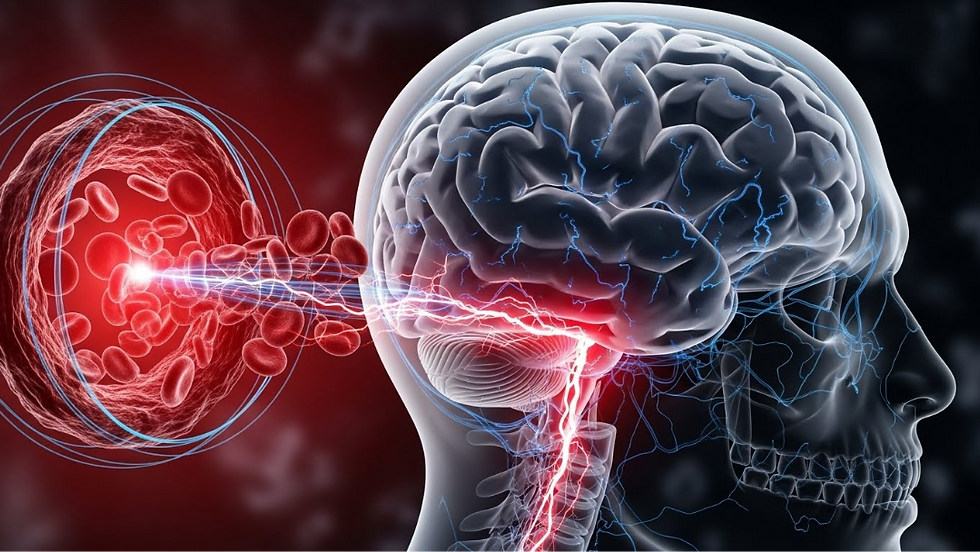
Researchers at the University of Auckland have identified a specific region of the brain responsible for driving high blood pressure, a discovery that could revolutionize how hypertension is treated.
The study, led by Professor Julian Paton, director of the Centre for Heart Research, points to the lateral parafacial region located within the brainstem. This area is part of the brain’s oldest architecture, typically responsible for automatic life-support functions like heart rate and breathing.
The researchers found that while this region is normally recruited for “forced” exhalations—such as those used during exercise, coughing, or laughing—it also possesses a direct connection to nerves that tighten blood vessels. This tightening mechanism is what ultimately forces blood pressure to rise.
“We’ve unearthed a new region of the brain that is causing high blood pressure,” stated Professor Paton. “Yes, the brain is to blame for hypertension!”. Experimental results showed that when this specific region was inactivated, blood pressure returned to normal levels.
One of the most significant hurdles in treating brain-related conditions is the difficulty of delivering drugs to a specific area without affecting the entire organ. However, the team discovered that the lateral parafacial region is triggered by carotid bodies—tiny oxygen sensors located in the neck.
By targeting these sensors “remotely,” doctors may soon be able to deactivate the overactive brain region using medication that does not need to penetrate the brain itself. This approach offers particular hope for patients suffering from sleep apnoea, whose carotid bodies are known to be highly active at night.
🔖 Sources


Keywords: brain link to high blood pressure
brain link to high blood pressure


Comments