

The Resident TV Series Medical Review: Porphyria, Organophosphate Poisoning (S3E14 Review)
- Apr 27
- 8 min read
Medical dramas thrive on the unexpected, pulling back the curtain on the fragility of the human body and the detective work required to save it. Season 3, Episode 14 of The Resident is a masterclass in clinical sleuthing, presenting viewers with two separate, high-stakes medical mysteries unfolding simultaneously within the chaotic walls of Chastain Park Memorial Hospital. In one operating room, a seemingly straightforward trauma case spirals into a terrifying, inexplicable physiological collapse. Down in the emergency department, a bizarre cluster of severely ill patients mimics the symptoms of chemical warfare. By intertwining an ancient, misunderstood genetic disorder with a modern toxicological outbreak, this episode highlights the sheer breadth of knowledge physicians must draw upon to keep their patients alive. In this comprehensive review, we will dissect these complex clinical presentations, navigate the perilous landscape of emergency differential diagnoses, and explore the underlying pathologies that defined this adrenaline-fueled hour of television, all while preserving the narrative arcs of the show.

Initial Presentation and Emergency Room Visits
The doors of an emergency department rarely stop swinging, and the influx of patients often requires doctors to instantly pivot between blunt physical trauma and subtle, insidious systemic illnesses.
The primary presentation in this episode centers on John Copple, a well-known philanthropist who arrives at Chastain following a brutal, high-speed jet ski accident. His initial presentation is dominated by acute trauma. However, during his trauma evaluation, scans reveal a terrifying secondary issue: a Recurrent Benign Brain Tumor. Because the regrowth threatens to cause increased intracranial pressure and permanent vision loss, he is fast-tracked to the operating room. But the true medical crisis emerges on the surgical table. While being prepped, John suffers sudden, life-threatening hemodynamic instability. His presentation violently shifts from a stable pre-op patient to a surgical nightmare characterized by extreme tachycardia, wildly labile blood pressure, and acute, agonizing abdominal pain, forcing the surgical team to completely abort the brain surgery to prevent him from dying on the table.
Simultaneously, the emergency room is inundated with a cluster of three patients—Doug, Raj, and Cynthia. Their initial presentation is a bizarre, deeply unsettling array of symptoms. They arrive drooling profusely, suffering from explosive diarrhea, and fighting through acute respiratory distress. A physical examination quickly reveals pinpoint pupils (miosis). Unlike trauma patients whose injuries are externally obvious, this trio presents with a systemic, hyperactive physiological meltdown that looks less like a standard illness and more like they have been exposed to a weaponized nerve agent.

The History of Presenting Symptoms
A patient’s medical history is the compass that guides diagnosticians through a storm of confusing symptoms. In both of these cases, the clinical history was heavily obscured by distracting variables.
For John Copple, the history of his presenting symptoms was initially overshadowed by his jet ski accident. When he complained of severe abdominal pain, the surgical team logically assumed it was a history of recent blunt force trauma. However, a deeper dive into his medical past revealed that this agonizing abdominal pain was recurrent and chronic, long preceding the accident. Furthermore, he had a history of unexplained blistering skin lesions on his shoulder. These historical details proved that his surgical crash was not a complication of his trauma or his brain tumor, but a completely separate, underlying systemic disease violently reacting to the surgical environment.
The history of the ER trio—Doug, Raj, and Cynthia—required a different kind of epidemiological detective work. Initially, their symptoms seemed completely unrelated, as they were disparate individuals with no obvious connection. However, the history of their presenting symptoms necessitated an aggressive investigation into their recent activities and ingestions. The critical breakthrough came when the team traced their illness back to a single, common historical link: all three patients had recently begun taking a new, supposedly health-boosting dietary supplement called "3B Life."

Navigating the Differential Diagnoses
In a high-level trauma center, diagnosing a patient is rarely a straight line; it is a process of systematic elimination, constantly weighing the odds of common emergencies against rare anomalies.
When John arrived following his jet ski crash, the immediate differential diagnoses were firmly rooted in trauma protocols. The team rapidly evaluated him for a Traumatic Brain Injury (TBI) and Concussion, noting his confusion and altered Glasgow Coma Scale (GCS) score. They also had to rule out catastrophic skeletal injuries like a Pelvic and Sacroiliac (SI) Joint Fracture, which can completely separate the spine from the pelvis. When his blood pressure dropped, they aggressively hunted for an Internal Iliac Artery Tear, a lethal vascular injury capable of causing massive internal bleeding and Hypovolemic Shock. During his subsequent OR crash, the team had to manage lethal cardiac arrhythmias like Ventricular Tachycardia and Ventricular Fibrillation. They even had to consider if his instability was caused by Hypocalcemia, an abnormally low calcium level that can be triggered as a complication of receiving massive blood transfusions.
Down in the ER, the team faced a completely different diagnostic minefield. When the trio of patients arrived with severe gastrointestinal distress, the initial suspicion leaned toward a severe Foodborne Illness, such as Salmonella, seemingly linked to the consumption of raw eggs in a Caesar salad. As their breathing worsened, the team had to consider Acute Respiratory Distress Syndrome (ARDS), a severe lung condition requiring mechanical ventilation. All the while, the ER continued to manage the standard influx of hospital chaos, including treating a patient transferred for a post-surgical complication involving a painful, oozing incision from a prior Hernia repair. Distinguishing the cluster's unique toxicological symptoms from the background noise of standard ER infections and trauma was the ultimate test of the staff's clinical acumen.

The Definitive Diagnoses and Clinical Clues

The resolutions to both medical mysteries relied on recognizing classic, textbook patterns of symptoms that are rarely seen in modern emergency rooms.
For John, the definitive diagnosis was Porphyria. The brilliant deduction was made by Dr. Conrad Hawkins, who recognized a highly specific triad of clinical clues: recurrent abdominal pain, hyponatremia (abnormally low sodium levels in the blood), and blistering skin lesions on sun-exposed areas like the shoulder. Suspecting this rare disease, Hawkins performed a classic bedside test: he placed John's urine sample in direct sunlight. Because porphyria causes a massive buildup of porphyrins in the body, the UV light reacted with these compounds, causing the urine to visibly change to a dark, purplish-red color, instantly confirming the diagnosis.
For the ER trio, the definitive diagnosis was Organophosphate Poisoning. The clinical clues perfectly aligned with a "Cholinergic Crisis," an overstimulation of the parasympathetic nervous system. The doctors utilized the classic medical mnemonic "MUDDLES" (Miosis, Urination, Diarrhea, Diaphoresis, Lacrimation, Excitation, Salivation) to connect the drooling, pinpoint pupils, and respiratory distress. The poisoning was definitively traced to the 3B Life supplement, which had been dangerously contaminated with toxic pesticides.
Etymology of the Diagnoses
The term "Porphyria" is derived from the ancient Greek word porphura, which translates to "purple." This is a direct reference to the dark, purplish color the patients' urine turns when exposed to light during an acute attack. "Organophosphate" is a chemical portmanteau indicating an organic compound containing a phosphate group, forming the chemical basis for many global agricultural insecticides and nerve agents.
Brief Pathophysiology
Porphyria encompasses a group of rare genetic disorders caused by a defect in the enzymes responsible for synthesizing heme (a vital component of hemoglobin). Because the assembly line is broken, the precursor chemicals—porphyrins—build up to toxic levels in the liver, skin, and nervous system. An acute attack can be triggered by stress, fasting, certain medications, or specific wavelengths of light, leading to severe nerve pain, abdominal agony, and cardiovascular collapse, exactly as John experienced under the bright OR lights.
Organophosphates are potent inhibitors of an enzyme called acetylcholinesterase. Normally, this enzyme breaks down acetylcholine, a neurotransmitter that tells muscles to contract and glands to secrete. When organophosphates block this enzyme, acetylcholine floods the nervous system and cannot be cleared. The body's parasympathetic "rest and digest" system goes into lethal overdrive, causing the patient to essentially drown in their own bodily secretions while their muscles paralyze.
Real-World Epidemiology
Porphyria is a very rare genetic condition, affecting roughly 1 in 20,000 individuals, though many remain asymptomatic until exposed to a specific trigger. Because its symptoms mimic so many other common abdominal and neurological issues, it frequently goes undiagnosed for years. Organophosphate poisoning, conversely, is a massive global health issue. The World Health Organization estimates that millions of agricultural workers suffer from acute organophosphate pesticide poisoning annually, particularly in developing nations. While rare to find in a dietary supplement in the US, accidental ingestions and agricultural exposures make it a highly prevalent toxicological emergency worldwide.

Specialized Treatments Administered
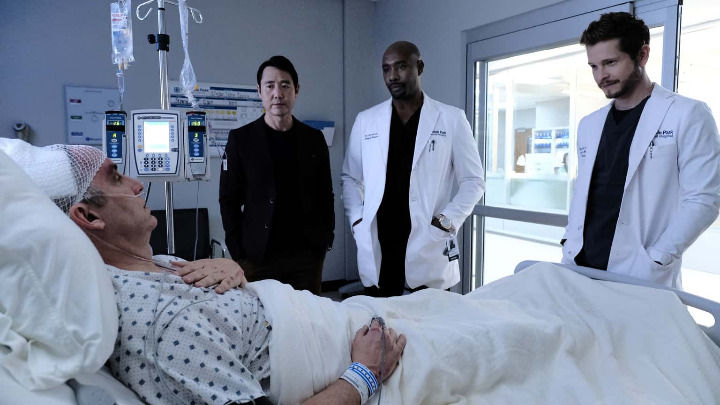
Treating these conditions required rapid, highly specific interventions to reverse the physiological cascades threatening the patients' lives.
To safely operate on John and remove his recurrent brain tumor, the surgical team had to aggressively modify the operating room environment. Porphyric crises are frequently triggered by specific environmental stressors. To prevent another hemodynamic collapse, the team placed specialized colored filters over the intense OR lights to change the light's wavelength, preventing the phototoxic reaction. Furthermore, the anesthesiologist strictly adhered to a highly curated list of non-porphyrinogenic medications, ensuring that no drugs administered would trigger the faulty heme-synthesis pathway. With these rigorous precautions, the tumor was successfully and safely removed.
For Doug, Raj, and Cynthia, surviving organophosphate poisoning required a two-pronged pharmacological rescue. They were rapidly administered Atropine, a medication that blocks the acetylcholine receptors, effectively drying up their lethal airway secretions and stopping the deadly drops in heart rate. Following the atropine, they were treated with 2-PAM (Pralidoxime), an antidote that works to chemically pry the organophosphate toxin off the acetylcholinesterase enzyme, reactivating it and permanently stopping the cholinergic crisis.

A Curious Medical Fact: The Legend of the Vampire
One of the most fascinating aspects of Porphyria is its enduring connection to folklore. Many medical historians believe that undiagnosed cases of Porphyria during the Middle Ages heavily contributed to the creation of the vampire myth. Patients with certain types of porphyria suffer from extreme photosensitivity; exposure to sunlight causes their skin to blister, burn, and disfigure, forcing them to avoid daylight and only go out at night. The disease can cause the gums to recede, making the canine teeth look unnaturally prominent like fangs. Additionally, historically, medical practitioners recommended drinking animal blood to replenish the heme that the patients' bodies could not produce. Combined with the deep, blood-red color of their urine, it is easy to see how a misunderstood genetic metabolic disorder birthed one of history's most famous monsters.

🔖 Key Takeaways
🗝️ Porphyria is a rare genetic disorder of heme synthesis characterized by the toxic buildup of porphyrins, presenting with a classic triad of recurrent abdominal pain, hyponatremia, and light-sensitive skin blistering.
🗝️ The "urine in the sunlight" test is a classic, rapid bedside diagnostic tool for porphyria, as UV exposure causes the excess porphyrins in the urine to turn a dark, purplish-red.
🗝️ Surgical intervention on porphyria patients requires extreme environmental caution, including the use of light filters and the strict avoidance of certain anesthesia drugs that can trigger lethal hemodynamic collapse.
🗝️ Organophosphate poisoning causes a life-threatening Cholinergic Crisis, triggering an overstimulation of the nervous system that leads to profuse secretions, pinpoint pupils, and respiratory failure.
🗝️ The "MUDDLES" mnemonic is a vital diagnostic tool for emergency physicians to quickly recognize the widespread parasympathetic overdrive caused by nerve agents and pesticides.
🗝️ Atropine and 2-PAM are the definitive antidotes for organophosphate toxicity, working together to dry up lethal secretions and chemically reactivate the poisoned enzymes.
Keywords: The Resident Medical Review S3E14
The Resident Medical Review S3E14


Comments