

The Resident TV Series Medical Review: Tuberculosis, Abdominal Aortic Aneurysm (S5E06 Review)
- May 8
- 9 min read

Medical dramas continually captivate audiences by highlighting the fragile boundary between life and death, but they reach their true pinnacle when they expose the terrifying consequences of diagnostic errors. Season 5, Episode 6 of The Resident delivers a masterclass in high-stakes clinical deduction, throwing the staff of Chastain Memorial Hospital into the center of both a volatile hostage crisis and a catastrophic sports trauma. By contrasting a desperate father who believes he is dying of an incurable disease with an elite athlete whose body is silently betraying her from the inside out, the episode emphasizes the relentless vigilance required in modern medicine. A diagnosis is not always what it seems, and physical strength is no match for hidden vascular anomalies. In this comprehensive review, we will dissect these gripping clinical presentations, unravel the complex web of differential diagnoses, and explore the underlying pathologies that defined this unforgettable, adrenaline-fueled hour of television.

Initial Presentation and Emergency Room Visits
The threshold of an emergency department usually acts as a triage zone for incoming traumas, but in this episode, the hospital itself becomes the epicenter of the emergency. The Chastain staff is confronted with vastly different clinical realities that demand immediate, high-acuity intervention and profound psychological de-escalation.
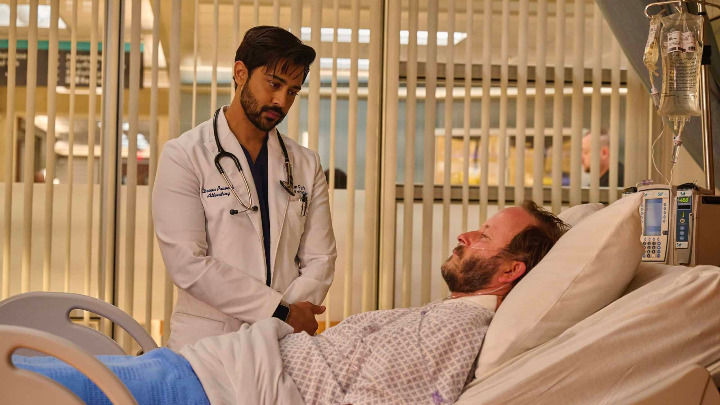
The most shocking and volatile medical investigation centers on Jackson Tellenbaum. Jackson does not arrive via ambulance; he presents to the hospital pharmacy in a state of absolute psychological desperation. Believing he is a "dead man" after being diagnosed with terminal stage IV metastatic lung cancer at a different facility, Jackson takes the pharmacy hostage. His primary goal is to obtain "Halcipride," a targeted oncology therapy he saw in a television advertisement, desperately hoping it will buy him more time with his son. His presentation is a chaotic mix of acute emotional distress and chronic physical decline, culminating in a violent, self-inflicted neck wound during the standoff that instantly transforms him from an armed assailant into a critical trauma patient requiring emergency surgical stabilization.
Simultaneously, the trauma bays are occupied by Tamiko Rodriguez, a renowned MMA champion whose presentation is a perfect storm of blunt force trauma and hidden systemic disease. Tamiko is admitted following a brutal, high-intensity weigh-in brawl. Her initial presentation includes severe paresthesia (tingling and numbness) in her lower extremities, an alarming neurological deficit following physical combat. Furthermore, a physical examination reveals a pronounced, palpable abdominal mass. This combination of neurological compromise and an unexplained abdominal anomaly instantly elevates her triage status, warning the trauma team that they are dealing with a crisis far more complex than simple sports-related contusions.

The History of Presenting Symptoms
Gathering a meticulous medical and personal history is the ultimate investigative tool in medicine, often providing the very clues needed to correct past mistakes or anticipate future complications.
For Jackson Tellenbaum, his history of presenting symptoms was overshadowed by the terminal label placed upon him by previous physicians. His medical records detailed a history of lung lesions and nodules that had been rapidly classified as advanced malignancy. Because this historical diagnosis of metastatic cancer had been accepted as absolute truth, his progressive weight loss, systemic fatigue, and respiratory decline were all viewed through the lens of oncology. However, his history lacked the characteristic progression expected in end-stage lung cancer, prompting Dr. Conrad Hawkins and Dr. Devon Pravesh to question the foundation of his "terminal" status.
Tamiko Rodriguez’s history was framed by the grueling physical demands of professional mixed martial arts. As an athlete, chronic pain and joint stiffness are often normalized and dismissed as occupational hazards. However, her history of back stiffness masked a severe, undiagnosed rheumatological condition. Her acute history—the violent trauma of the brawl—acted as the mechanical catalyst that unmasked her underlying vulnerabilities.
While the medical teams managed these primary crises, the emergency department was also humming with the histories of other patients requiring rapid intervention. Physicians evaluated a patient presenting with an Asthma exacerbation, struggling for breath, while another required immediate triage for a Deep Vein Thrombosis (DVT), a dangerous blood clot in the deep veins of the leg. Furthermore, the staff narrowly averted a catastrophe involving a patient suffering from Elevated Tyramine levels. This patient experienced a dangerous drug-food interaction between an antidepressant patch and specific dietary choices, leading to a Hypertensive Crisis that placed them at critical risk for a Stroke if their blood pressure was not rapidly controlled.

Navigating the Differential Diagnoses
In a bustling hospital environment, diagnosing a patient requires rigorous systematic elimination, especially when initial assumptions prove flawed or when a patient's physical trauma masks a pre-existing condition.
For Jackson, the presumed diagnosis of Stage IV Metastatic Lung Cancer was the primary hurdle. As Dr. Hawkins and Dr. Pravesh observed him during the hostage crisis, they began to mentally construct a new differential diagnosis. The lung nodules and necrotic tissue noted in his history could also be the result of severe infectious processes. They considered a range of fungal infections, including Histoplasmosis, Blastomycosis, and Coccidiomycosis, which are notorious for mimicking lung malignancies on imaging. They also expanded their differential to include rare bacterial infections like Brucellosis and Actinomycosis to explain his systemic decline.
For Tamiko, the differential diagnosis was a terrifying mix of oncological and vascular emergencies. The palpable abdominal mass initially led the team to consider severe intra-abdominal malignancies, such as a Lymphoma or a Hepatobiliary Tumor. However, her bilateral lower extremity paresthesia strongly suggested spinal cord compromise. The team had to quickly rule out Cauda Equina Syndrome, a critical compression of the nerve roots at the base of the spinal cord. Furthermore, her history of undiagnosed Hypertension was noted as a significant risk factor that increased the likelihood of a catastrophic vascular event, shifting the focus from oncology to immediate trauma surgery.

The Definitive Diagnoses and Clinical Clues

The resolutions to these complex medical mysteries relied on razor-sharp clinical observation, a refusal to accept inherited medical dogmas, and the utilization of advanced radiological imaging.
For Jackson Tellenbaum, the definitive diagnosis was Disseminated Tuberculosis (TB). The diagnostic breakthrough occurred because Dr. Hawkins and Dr. Pravesh noticed two glaring clinical discrepancies. First, Jackson completely lacked "clubbing" of the fingernails—a bulbous deformity of the fingertips that is a nearly universal sign in advanced lung cancer due to chronic hypoxia. Second, they noted that Jackson exhibited unusually hyper-pigmented (darkened) skin. These clues painted a new picture: Jackson suffered from a severe TB infection that had originated in his lungs (mimicking cancer) and had disseminated (traveled) to his spine and adrenal glands. The destruction of his adrenal glands by the TB bacteria caused Addison's disease, which was the direct physiological cause of his skin hyper-pigmentation. He was not a terminal cancer patient; he was suffering from a highly curable infectious disease.
For Tamiko Rodriguez, the definitive diagnosis was a Ruptured Abdominal Aortic Aneurysm (AAA) complicated by Ankylosing Spondylitis. Imaging revealed that the palpable mass was a massive six-centimeter AAA. Furthermore, her spine showed the classic "bamboo spine" appearance characteristic of Ankylosing Spondylitis, a severe inflammatory disease that caused her vertebrae to permanently fuse together. Because her spine was rigid and brittle, the blunt force trauma from the MMA brawl resulted in a Column 3 Unstable Fracture at L1 (the first lumbar vertebra). The sheer mechanical force of this spinal fracture subsequently ruptured her pre-existing aortic aneurysm, plunging her into a life-threatening crisis.
Etymology of the Diagnoses
The word "Tuberculosis" is derived from the Latin tuberculum, meaning "a small swelling or lump," and the Greek suffix -osis, meaning "condition" or "disease," perfectly describing the small nodular lesions (tubercles) the bacteria form in the lungs. "Aneurysm" comes from the Greek word aneurysma, meaning "a dilation" or "widening." "Ankylosing Spondylitis" is a highly descriptive compound term: ankylos is Greek for "bent" or "stiff," spondylos means "vertebra," and -itis denotes inflammation, accurately describing the inflammatory stiffening and fusion of the spinal column.
Brief Pathophysiology
Tuberculosis is caused by the Mycobacterium tuberculosis bacteria. While it primarily attacks the lungs, causing caseating granulomas (necrotic nodules that mimic tumors), it can spread through the bloodstream to other organs. When it attacks the adrenal glands, it destroys the tissue responsible for producing cortisol. The resulting lack of cortisol triggers the pituitary gland to overproduce ACTH (adrenocorticotropic hormone) and MSH (melanocyte-stimulating hormone), leading directly to the hyper-pigmented skin observed in Jackson.
An Abdominal Aortic Aneurysm is a localized weakening and ballooning of the wall of the abdominal aorta. When the aortic wall stretches to six centimeters, it becomes critically thin. Ankylosing Spondylitis causes chronic inflammation of the spinal joints, eventually leading to auto-fusion of the vertebrae (calcification of the spinal ligaments). This creates a solid, immobile column of bone ("bamboo spine") that lacks the normal shock-absorbing flexibility of a healthy spine. When Tamiko sustained trauma during the brawl, her brittle spine snapped, causing an unstable L1 fracture. The bone fragments and sheer mechanical shifting ruptured the fragile AAA situated just anterior to the spine, leading to massive internal bleeding and impending Hemorrhagic Shock.
Real-World Epidemiology
Tuberculosis remains one of the top infectious killers globally, though it is relatively rare in the United States, which frequently leads to misdiagnosis when physicians encounter its more unusual, disseminated presentations. Abdominal Aortic Aneurysms are most commonly found in older males with a history of smoking and hypertension; finding a massive AAA in a young, female elite athlete is an extraordinary clinical rarity. Ankylosing Spondylitis predominantly affects young males, but when it occurs in females, it can often go undiagnosed for years, dismissed as mechanical back pain until severe fusion or a catastrophic fracture occurs.

Specialized Treatments Administered
The medical management in this episode showcases the incredible spectrum of clinical interventions, from straightforward pharmacological cures to some of the most complex, high-wire surgical procedures in modern medicine.
For Jackson Tellenbaum, surviving the self-inflicted neck wound was the first hurdle. Once surgically stabilized, his "terminal" status was entirely revoked. Instead of toxic chemotherapy or experimental "Halcipride," Jackson was started on a standard, highly effective six-month course of anti-TB antibiotics (typically including Isoniazid, Rifampin, Ethambutol, and Pyrazinamide). He walked away from a death sentence with a highly affordable, curative treatment plan, giving him the precious time with his son that he thought he had lost forever.
Tamiko Rodriguez required a monumental, multi-disciplinary surgical intervention to survive her ruptured aneurysm and prevent permanent paralysis. Because she was losing massive amounts of blood, she was at immediate risk for Hemorrhagic Shock—a fatal drop in blood pressure and organ perfusion. Dr. AJ Austin and Dr. Randolph Bell performed the first stage of the repair, urgently resecting the ruptured Abdominal Aortic Aneurysm and sewing in a synthetic vascular graft to restore blood flow to her lower body.
Once hemodynamically stable, the second stage commenced. Dr. Billie Sutton led a highly delicate posterior stabilization and spinal fusion to repair the Column 3 Unstable Fracture at L1. The primary risk during this orthopedic reconstruction was Spinal Cord Impingement—accidental pressure on the spinal cord from surgical hardware or bone fragments that could leave the MMA champion permanently paralyzed. To prevent this, the team utilized a high-stakes intraoperative technique to verify her neurological integrity before closing the incision.

A Curious Medical Fact: The Stagnara Wake-Up Test
One of the most fascinating and intense clinical techniques featured during Tamiko's spinal surgery is the "wake-up test," formally known in the medical community as the Stagnara wake-up test. During complex spinal deformity surgeries or the stabilization of severe spinal fractures, there is a significant risk that the manipulation of the spine or the placement of metal screws and rods will pinch, stretch, or impinge the spinal cord. To ensure the patient's motor pathways are intact, the anesthesiologist will intentionally lighten the anesthesia mid-surgery while the patient's spine is still completely exposed. The surgical team will verbally command the groggy, semi-conscious patient to wiggle their toes or move their feet. If the patient successfully moves their lower extremities on command, the surgeons have immediate, definitive proof that the spinal cord has not been compromised by the hardware. Once motor function is verified, the patient is put back under deep anesthesia to finish the procedure. It is a terrifying but incredibly effective way to prevent permanent postoperative paralysis.

🔖 Key Takeaways
🗝️ Disseminated Tuberculosis can perfectly mimic metastatic cancer on imaging but requires a vastly different, highly curable antibiotic treatment regimen.
🗝️ A lack of nail "clubbing" and the presence of hyper-pigmented skin are critical clinical clues that can point away from advanced lung cancer and toward adrenal insufficiency caused by an infectious disease like TB.
🗝️ Ankylosing Spondylitis ("bamboo spine") causes the vertebrae to fuse, making the spine rigid, brittle, and highly susceptible to unstable fractures from blunt force trauma.
🗝️ A Ruptured Abdominal Aortic Aneurysm (AAA) is a catastrophic vascular emergency that leads rapidly to Hemorrhagic Shock and requires immediate surgical resection and grafting.
🗝️ The "Wake-up Test" (Stagnara test) is an intraoperative neurological assessment used during complex spinal surgeries, where anesthesia is lightened so the patient can move their feet on command to verify spinal cord integrity.
🗝️ Elevated Tyramine from drug-food interactions (often involving MAOI antidepressants) can cause a severe Hypertensive Crisis, placing a patient at high risk for a stroke.
Keywords: The Resident Medical Review S5E06
The Resident Medical Review S5E06


Comments