

Untreated Sleep Apnea Raises Parkinson’s Risk
- Nov 25, 2025
- 2 min read
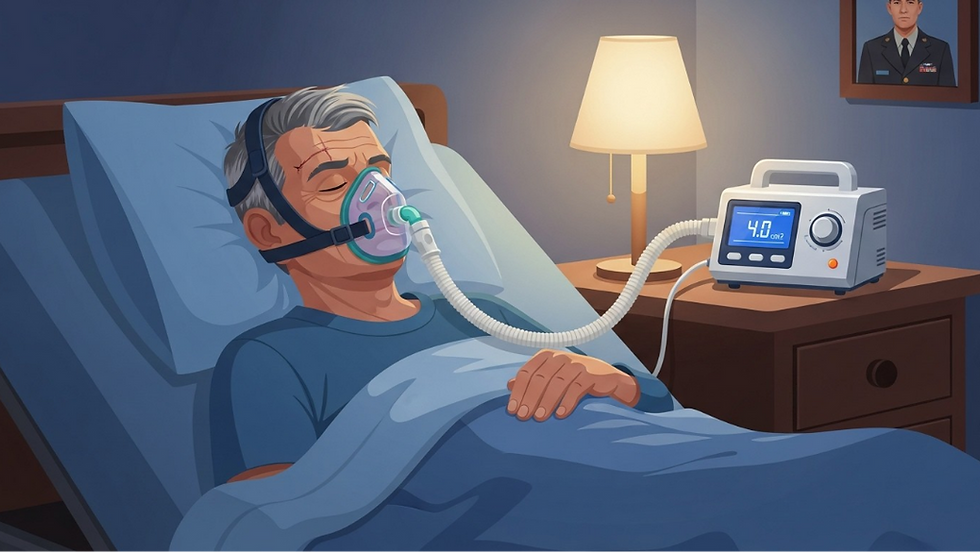
New research published today in the journal JAMA Neurology provides a compelling reason for individuals suffering from obstructive sleep apnea (OSA) to seek immediate and consistent treatment. The comprehensive study, which analyzed the electronic health records of over 11 million U.S. military veterans who received care through the Department of Veterans Affairs between 1999 and 2022, revealed a strong and concerning link: people with untreated obstructive sleep apnea have a higher risk of developing Parkinson’s disease.
Parkinson's disease (PD) is a progressive neurodegenerative condition estimated to affect 1 million people nationwide, with risk generally increasing incrementally for individuals over the age of 60. This new finding strongly suggests that sleep apnea—a common condition where breathing repeatedly stops and restarts during sleep, leading to reduced oxygen levels—heightens the long-term risk of developing PD.
Crucially, the study also found that those who treat their sleep apnea using Continuous Positive Airway Pressure (CPAP) can significantly reduce this elevated risk. The findings, led by researchers from Oregon Health & Science University (OHSU) and the Portland VA Health Care System, maintained a strong association between untreated sleep apnea and PD even after adjusting for potential confounding factors such as age, obesity, and high blood pressure.
Specifically, the data showed that among millions of individuals diagnosed with sleep apnea, those who did not utilize CPAP to treat the condition were nearly twice as likely to develop Parkinson's disease compared to those who consistently used the device.
Co-author Gregory Scott, M.D., Ph.D., an assistant professor of pathology at the OHSU School of Medicine, underscored the gravity of the finding, stating that while sleep apnea treatment is not a guarantee against PD, it "significantly increases the chances" of protection.
The underlying mechanism appears related to oxygen deprivation caused by untreated OSA. Lead author Lee Neilson, M.D., an assistant professor of neurology at OHSU and a staff neurologist at the Portland VA, explained the cumulative damage: "If you stop breathing and oxygen is not at a normal level, your neurons are probably not functioning at a normal level either". He added that compounding this issue "night after night, year after year," may explain why CPAP treatment offers a benefit, potentially building resilience against neurodegenerative conditions like Parkinson’s.
In light of this research, Dr. Neilson has emphasized that he intends to prioritize the health benefits of sound sleep in his clinical practice.
The researchers hope these results will encourage wider compliance among those diagnosed with OSA who may currently resist treatment. Dr. Scott noted the positive experience of veterans who are dedicated CPAP users: “The veterans who use their CPAP love it,” he said, reporting that they feel better and are less tired. He believes that knowing about this significant reduction in Parkinson’s disease risk will further convince hesitant patients to try CPAP.
This landmark study solidifies the critical importance of diagnosing and treating sleep disorders as a preventative measure against long-term neurological decline. Treating sleep apnea may not just improve daily function; it appears to be a crucial step in safeguarding brain health.
🔖 Sources


Keywords: Sleep Apnea
Sleep Apnea


Four years ago, my husband was diagnosed with IPF (Idiopathic Pulmonary Fibrosis), a moment that changed our lives significantly. For more than two years, he followed his prescribed medications and attended regular medical checkups. Despite this, his symptoms persisted, and we remained concerned about his overall health. He struggled with low energy, frequent discomfort, and the emotional stress that came with ongoing uncertainty.In search of additional support, we decided last year to explore a herbal treatment program offered by NaturePath Herbal Clinic. We approached it cautiously and without high expectations. Over time, however, we began to notice encouraging changes. His tiredness eased, his digestion became more stable, and he appeared stronger and more at ease overall. Little by little, his…