

Why ER Remains the Best Medical Drama and Must-Watch TV for a New Generation
- Dec 6, 2025
- 6 min read

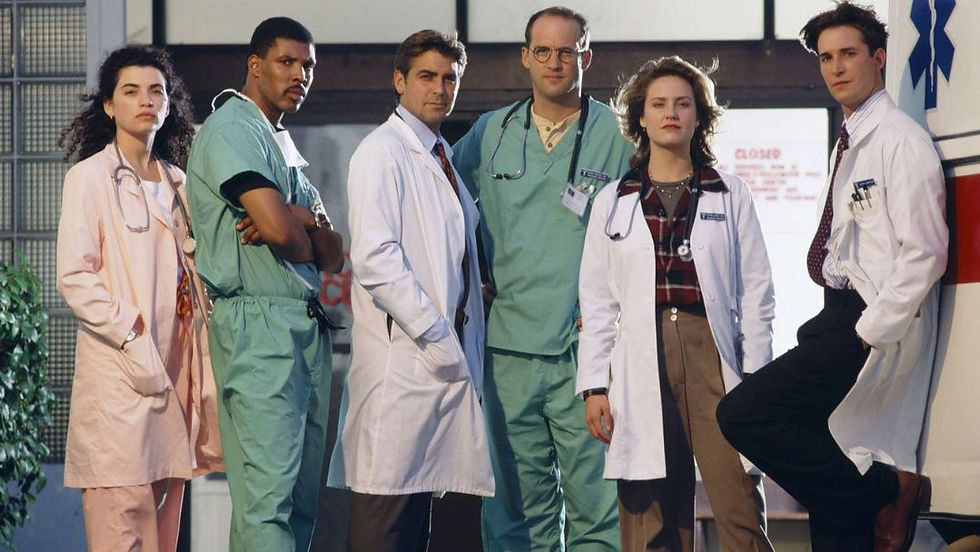
Thirty years after its debut, the NBC medical drama ER is experiencing a powerful resurgence, attracting new viewers and rewarding long-time fans who are rediscovering the world of County General. The show, which premiered in September 1994, is not just a relic of '90s television but is aging gracefully, offering timeless life lessons through themes of death and reinvention. Its enduring quality is evidenced by a recent streaming surge, with nearly 100,000 viewers completing a full binge of the entire series run. ER is more than just a hospital procedural; it is rightly considered "Medical Drama Royalty," having paved the way for subsequent hits like Grey’s Anatomy, The Good Doctor, and Chicago Med. Even contemporary critical favorites, such as the Primetime Emmy award-winning HBO show The Pitt, acknowledge their roots in ER. To understand why this 15-season saga remains superior to nearly every competitor, we must delve into the elements of realism, character development, ethical complexity, and surprising narrative innovations that defined its run.
The Foundation of Authenticity and Realism
What immediately set ER apart was its rigorous commitment to authenticity, a quality derived directly from its creator, Michael Crichton. Crichton, who served as an executive producer on the show, based the entire series on his 1974 screenplay titled "EW" (Emergency Ward), which in turn was inspired by his own experiences as a medical student. This foundational history is why the show feels so authentic, plunging viewers directly into the intense, fast-paced environment of the emergency room.
The result of this commitment was a medical drama that delivered intense realism, often proving gruesome for primetime television in the 1990s. But realism extended beyond the surgical details; the show constantly placed viewers in the patient’s and doctor’s shoes, forcing them to question their own moral stances. Every episode presented a new ethical dilemma, demanding quick decisions that weighed heavily on both the healthcare system and the workers themselves. This blend of high-stakes medicine and moral ambiguity cemented ER’s position as a distinct and thrilling show from its very first episode, "24 Hours". Its gritty, realistic atmosphere undoubtedly influenced later dramas, including The Pitt, which maintains a busy, gritty feeling in its depiction of doctors, residents, and nurses.

Character Depth Beyond the O.R.
The ultimate success of any workplace drama hinges on how compelling the main characters are, both on and off the clock. ER masterfully crafted a unique dynamic between its ensemble cast—including John Carter, Doug Ross, and Carol Hathaway—making viewers genuinely care about their fates. The core characters felt different and real, fostering relatable friendships and rivalries that mirrored a true work environment.
A key example of this character development is the early appearance of Noah Wyle as medical student John Carter. If fans know Wyle as the "grizzled vet" Dr. Robby in The Pitt, his role as young Carter provides a crucial perspective on who that character might have been at the start of his career, bringing spirit and depth to the role. The tough doctor trope, a staple in medical dramas, worked so well in ER because characters were consistently humanized. For instance, Doug Ross was defined by more than just his job, having a sad and complex backstory including a son he fathered but did not know.
Groundbreaking Focus on Healthcare Worker Mental Health
While ER primarily focused on saving lives, it was unafraid to tackle the personal toll that medicine takes. The pilot episode, "24 Hours," immediately distinguished the show by focusing on nurse Carol Hathaway’s (Julianna Margulies) deeply emotional storyline surrounding her attempted suicide. Although this specific plotline had some issues, it bravely opened a necessary conversation about the mental health struggles of healthcare workers, refusing to portray doctors solely as unfazed, accomplished heroes. The show consistently found the fine line between compelling professional narratives and vulnerable personal stories, ensuring that characters like Carter and Hathaway were viewed as complex individuals.

Medical Drama Royalty and Enduring Influence
For fans of modern medical procedurals, ER is required viewing, having set the benchmark for the entire genre. Its influence is undeniable, paving the way for hits like Grey’s Anatomy, which, while popular, often focuses too heavily on "melodramatic romantic plotlines" compared to ER’s more realistic portrayal of relationships, such as the moving, yet imperfect, romance between Doug Ross and Carol Hathaway.
The series ran for 15 seasons, proving its longevity and commitment to character development. Even late in its run, the show continued to introduce compelling figures, such as Dr. Catherine Banfield (Angela Bassett), who was introduced with a compelling plotline and focused on mentorship, proving the show’s sustained attention to quality character arcs. In contrast, some critics argue that recent seasons of competitor dramas suffer from the introduction of weak interns and an over-reliance on melodramatic romance, a pitfall ER largely avoided.
Tackling Topical and Complex Social Issues
A major component of ER’s lasting relevance is its fearless willingness to tackle topical storylines. The show functioned as a mirror to society, covering deeply complex and sensitive issues throughout its run. Episodes addressed subjects such as AIDS, racism, addiction, homophobia, transphobia, abuse, sexism, ageism, and suicide. By integrating these issues directly into the medical cases and the lives of the doctors, ER made sure that medicine was never viewed as cut and dry, forcing both characters and viewers to constantly question the morals inherent in the healthcare system.

The Timeless Appeal and Rewatch Value
The streaming data confirms that ER is not merely a nostalgic favorite; it is Must-Watch TV today. The show's ability to age gracefully means that its lessons about death, reinvention, and life continue to resonate. Furthermore, viewers who watched ER in its original run appreciate the satisfying narrative closure provided by its finale.
One element that proves ER's mastery of television narrative is its ability to execute genuinely surprising moments. A crucial example is George Clooney’s return in Season 6, episode 21, "Such Sweet Sorrow," after he had already left the show. Executive producer John Wells ensured that the reunion between Doug Ross and Carol Hathaway was a "complete surprise" to the public; Clooney even arrived via a private plane to keep the appearance secret. This groundbreaking commitment to narrative secrecy created a truly special moment for fans—a feat that is exponentially harder to accomplish now given the pervasive nature of social media and the fast-paced modern TV landscape. This ability to innovate surprise reunions set the stage for similar emotional returns in modern dramas, such as Grey's Anatomy's handling of Meredith’s visions of dead characters.
ER remains as thrilling today as it was in the fall of 1994 because it consistently balanced high-octane medical emergencies with nuanced, human storytelling. While some might argue that newer programs like The Pitt are a close second, ER’s consistent character development over 15 seasons ensures it will likely never be surpassed.
🔖 Key Takeaways
🗝️ ER is Medical Drama Royalty: The show set the foundational standard for the modern medical procedural, influencing virtually all subsequent hits, including Grey's Anatomy, Chicago Med, and The Pitt.
🗝️ Authenticity and Ethics: Michael Crichton's vision, based on his own med student experiences, ensured the show delivered compelling medical realism while grappling with complex ethical issues and the toll on healthcare workers.
🗝️ Enduring Character Depth: The series excelled at crafting complex, real-feeling characters like John Carter and Doug Ross, expertly blending personal struggles (often referred to as "nighttime soap opera" adjacent moments) with professional pressures over 15 seasons.
🗝️ Timeless Rewatch Value: ER is aging gracefully and continues to attract massive streaming audiences (nearly 100,000 full binges) due to its satisfying narrative closure, its willingness to tackle topical social issues, and its mastery of groundbreaking, surprise storytelling.
🌐 External sources


Keywords: ER Remains the Best Medical Drama
ER Remains the Best Medical Drama



Comments