

mRNA Liver Reprogramming Boosts Aged Immune System
- hace 5 días
- 2 Min. de lectura
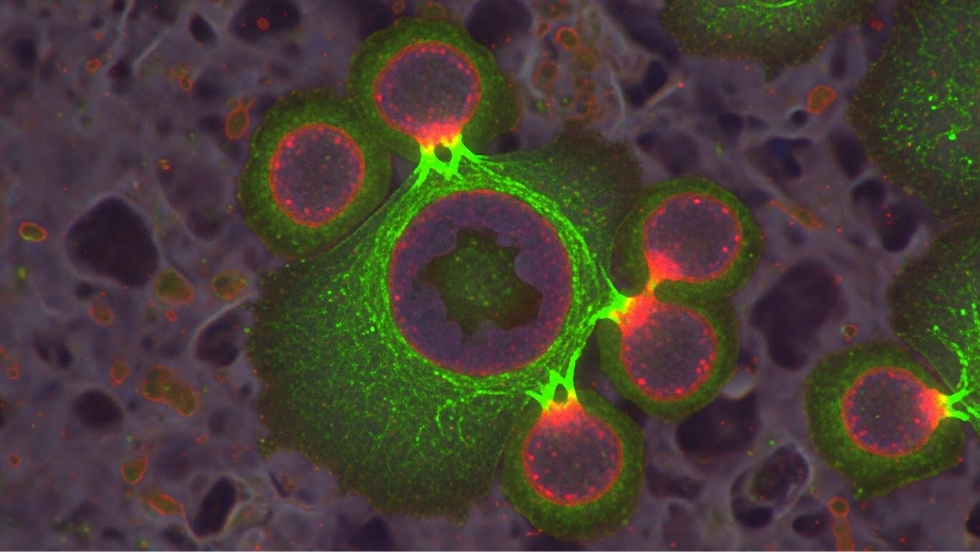
The decline of the immune system with age leaves older individuals more susceptible to various infections, as T cell populations become smaller and react more slowly to pathogens. This weakening is primarily due to the involution of the thymus, a small organ in front of the heart crucial for T cell maturation. Starting in early adulthood, the thymus shrinks, becoming essentially nonfunctional by around age 75, leading to a decline in new T cell production.
To counteract this age-related decay, researchers from MIT and the German Cancer Research Center (DKFZ) developed an innovative approach: using the liver as a temporary "factory" to generate the T-cell-stimulating signals that the aging thymus fails to produce. This synthetic approach essentially engineers the body to mimic thymic factor secretion.
The liver was selected as the ideal location because it maintains a high capacity for producing proteins even in old age, is easily accessible for mRNA delivery, and all circulating blood, including T cells, flows through it.
The team identified three key factors that decline with age and are important for T cell maturation: DLL1, FLT-3 (or FLT3L), and IL-7. They encoded these three factors into mRNA sequences and packaged them within lipid nanoparticles. Once injected into the bloodstream, these particles accumulate in the liver, where hepatocytes take up the mRNA and begin manufacturing the therapeutic proteins.
Tests in 18-month-old mice, roughly equivalent to humans in their 50s, showed remarkable beneficial effects. The treatment, administered through multiple injections over four weeks, successfully increased the size and function of T cell populations.
The rejuvenated immune system showed enhanced responses to external challenges:
Vaccination: Aged mice that received the mRNA treatment before vaccination showed a doubling in the population of cytotoxic T cells specific to the vaccine antigen (ovalbumin) compared to untreated mice of the same age.
Cancer Immunotherapy: The treatment also boosted the efficacy of checkpoint inhibitor drugs (which stimulate T cells to attack tumors). Mice that received the mRNA treatment alongside the checkpoint inhibitor showed much higher survival rates and longer lifespans than those receiving the drug alone. In aggressive melanoma models, tumors were even completely suppressed in treated old mice.
The researchers emphasized that all three factors (DLL1, FLT-3, and IL-7) were necessary to induce this comprehensive immune enhancement.
The researchers intentionally designed the mRNA effect to be temporary, minimizing the risk of unintended long-term changes and avoiding evidence of autoimmunity or liver toxicity. This novel approach demonstrates the potential of mRNA technology far beyond vaccines, offering a tool to restore biological functions precisely and temporarily. If developed for patients, this type of treatment could help people "stay free of disease for a longer span of their life".
🔖 Sources


Keywords: mRNA Liver Reprogramming
mRNA Liver Reprogramming

