

Grey's Anatomy TV Series Medical Review (S1E5 Review)
- Feb 26
- 7 min read
Updated: Mar 4

Whether you’re a surgical intern trying to survive the night or an attending who’s seen it all, we can all agree: Responsibility is a total drag. This shift at Seattle Grace was a "dark and twisty" masterclass in clinical accountability and the terrifying reality of what happens when we lose focus for just a second. We had a patient presenting for a major cardiac procedure who suddenly started hemorrhaging post-operatively, a woman struggling to breathe despite supposedly quitting a heavy smoking habit, and a "frequent flyer" with chronic pain whose discharge went south—fast. From interns falling asleep at the table to the "Chief" facing ghosts from his surgical past, this shift reminded us that even when we’re off the clock at a "doctor-palooza" house party, our patients always come first.
Here are the rounds from today’s shift:

The "Thin-Walled" Heart

Diagnosis
Angina; Tear in the ventricular wall; Anorexia.
Definition
Anorexia Nervosa is a serious eating disorder characterized by an intense fear of gaining weight and a distorted body image. Clinically, it often leads to cardiac complications, including the loss of heart muscle (atrophy) alongside fat loss, resulting in thin, weakened ventricular walls that are prone to injury.
Patient
Mrs. Patterson.
Case Summary
Mrs. Patterson was scheduled for a coronary artery bypass graft. During the procedure, a fatigued intern accidentally nicked the heart with a fingernail after a glove popped. While the patient initially stabilized, she later suffered a massive hemorrhage from her incision. It was discovered that her heart walls were dangerously thin; though she still weighed 200 pounds, her rapid 100-pound weight loss had caused significant cardiac muscle wasting, making a small "nick" turn into a life-threatening tear.
Care Team
Dr. Preston Burke (Attending Cardiothoracic Surgeon) and Meredith Grey (Surgical Intern).
Treatment
Coronary artery bypass graft (CABG) followed by an emergency secondary surgery to repair the ventricular tear.
What Went Wrong
Meredith Grey, suffering from extreme sleep deprivation after being awake for 48 hours, nodded off during surgery and squeezed the patient's heart so hard that her fingernail punctured her surgical glove. Meredith then failed to report the potential injury immediately, only confessing after the patient began bleeding post-operatively. Furthermore, the medical team missed a diagnosis of anorexia; because the patient still weighed 200 pounds, they did not realize her rapid 100-pound weight loss had caused her heart muscle to atrophy along with her body fat.
What Went Right
The team successfully stabilized the patient twice: once when she flatlined on the table and again when she began bleeding post-op. Meredith’s eventual confession allowed them to find the tear, though she was criticized for disclosing it in front of the husband, which creates significant legal liability.
Comparison to Nowadays
Modern residency programs have much stricter work-hour restrictions (often capped at 80 hours per week) specifically to prevent the type of fatigue-driven error Meredith committed. Additionally, modern "Just Culture" in hospitals encourages the immediate, non-punitive reporting of "near misses" or errors to prevent patient harm before it escalates.

The "Five-Year" Retained Item
Diagnosis
Foreign object (surgical cloth) in lung; Hyperinflated lungs.
Definition
A Retained Surgical Item (RSI) is a "never event" where surgical materials, such as sponges or towels, are unintentionally left inside a patient. This can lead to chronic pain, infection, and respiratory distress. Hyperinflated lungs occur when air gets trapped in the lungs, often due to obstructions or underlying disease, causing them to over-expand.
Patient
Stephanie Drake.
Case Summary
Stephanie presented with severe shortness of breath and chest pressure. While she had a history of heavy smoking, she had quit five years prior, yet her symptoms persisted. Imaging suggested bullae, but upon opening the chest, the team found a surgical cloth left behind from a back surgery performed at the same hospital years earlier.
Care Team
Dr. Richard Webber (Chief of Surgery), Dr. Miranda Bailey (Surgical Resident), and George O’Malley (Surgical Intern).
Treatment
Bullectomy and removal of the foreign body (the cloth).
What Went Wrong
Five years prior, Dr. Richard Webber left a surgical towel (cloth) inside the patient’s chest during surgery. Webber suspected at the time that he hadn't checked the cavity thoroughly but did not report his suspicion because he was in a hurry. For five years, the patient complained of chest pressure, but no one took her seriously, assuming her issues were due to her history of smoking.
What Went Right
Once the object was discovered during a bullectomy, the team moved quickly to an open procedure to remove it. Dr. Webber eventually used the incident to advocate for transparency, arguing that doctors must be able to admit mistakes without fear of immediate career termination to ensure everyone learns.
Comparison to Nowadays
Today, hospitals use rigorous sponge and instrument counts—often involving barcodes or radio-frequency identification (RFID) tags—to ensure nothing is left behind. A "retained surgical item" is now considered a "Never Event," meaning it is a medical error that should never occur with modern safety protocols.

The "Frequent Flyer" Neuro Emergency

Diagnosis
Subdural hematoma with midline shift; Drug addiction; Chronic back pain.
Definition
A Subdural Hematoma (SDH) is a type of bleeding where blood collects between the skull and the surface of the brain, usually caused by a head injury. A midline shift occurs when the pressure from the bleed pushes the brain’s structures off-center, which is a neurosurgical emergency.
Patient
Jerry Frost.
Case Summary
Jerry, a known drug-seeker with multiple hospital visits, presented with severe back pain from a previous spinal fusion. While the intern staff initially dismissed his pain as a ploy for narcotics, he was given medicine and ordered for discharge. As he was leaving, he fell and hit his head, leading to a blown pupil and a life-threatening brain bleed.
Care Team
Dr. Derek Shepherd (Attending Neurosurgeon), Alex Karev (Surgical Intern), and Izzie Stevens (Surgical Intern).
Treatment
Placement of a central line for medications and emergency brain surgery (craniotomy) to evacuate the hematoma.
What Went Wrong
Alex Karev exhibited significant bias against the patient, labeling him a "drug seeker" and initially refusing to follow Derek Shepherd's orders to start a central line to treat the patient's pain. The doctors attempted to discharge the patient while he was still in distress; during the confrontation, the patient fell and suffered a subdural bleed.
What Went Right
Derek Shepherd insisted on treating the patient's pain as real regardless of his addiction, citing the rule of "erring on the side of caution". Once the patient fell, the team recognized the clinical sign of a blown pupil immediately and performed life-saving brain surgery. Post-operatively, he was appropriately referred to rehab.
Comparison to Nowadays
Modern medicine places a higher emphasis on Multimodal Pain Management for patients with Opioid Use Disorder (OUD) to avoid the judgmental "drug seeker" stigma while still effectively managing legitimate acute pain.

The "Post-Op Milestone"
Diagnosis
Bowel obstruction (Post-operative).
Definition
A Bowel Obstruction is a blockage that keeps food or liquid from passing through the small or large intestine. Post-operative ileus or obstruction is common and requires the patient to demonstrate the return of bowel function (passing gas or stool) before discharge to ensure the GI tract is working.
Patient
Warren Sterman.
Case Summary
Warren was recovering from surgery for a bowel obstruction but could not be discharged because he had not yet passed gas or had a bowel movement. After staying an extra night for observation, he finally achieved the "clinical gold standard" and pooped, much to his (and his intern's) relief.
Care Team
Izzie Stevens (Surgical Intern).
Treatment
Surgery (initial) followed by observation and monitoring of GI function.
What Went Wrong
There are no explicit medical errors mentioned for this patient, though the patient himself expressed frustration at having a recurrence of a bowel obstruction.
What Went Right
Izzie Stevens followed standard post-operative protocol by refusing to discharge the patient until he had regained bowel function (confirmed by passing gas or pooping).
Comparison to Nowadays
This remains the gold standard for post-abdominal surgery care, though modern "Enhanced Recovery After Surgery" (ERAS) protocols might involve earlier mobilization and specific medications to help the bowels wake up faster than seen in the episode.

The "Legacy" Patient
Diagnosis
Alzheimer's Disease.
Definition
Alzheimer's Disease is a progressive neurodegenerative disorder that primarily affects memory and cognitive function. As the disease advances, patients lose the "lucid" capacity to make legal and medical decisions, requiring a power of attorney.
Patient
Ellis Grey.
Case Summary
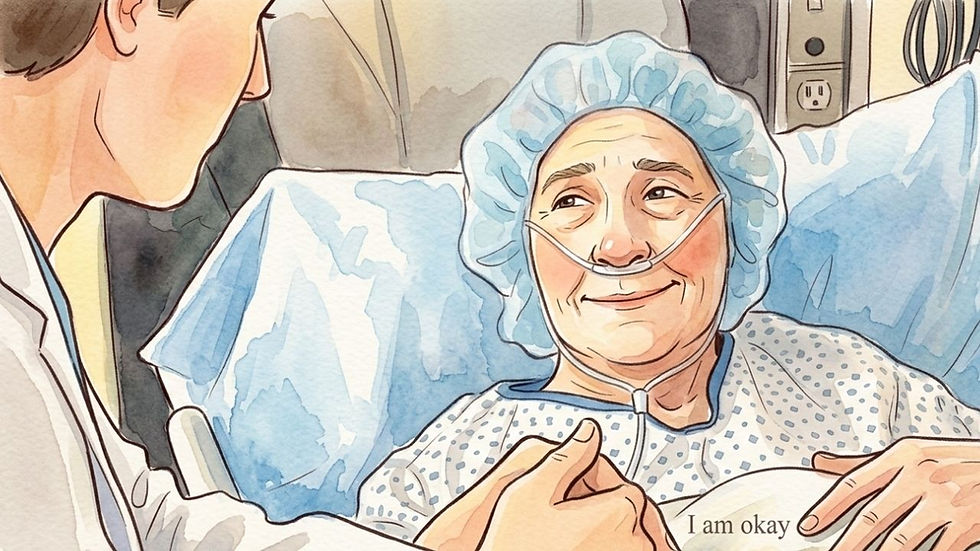
Ellis, a legendary surgeon herself, was suffering from advanced Alzheimer's. The case involved the legal struggle to have her sign over her estate and medical power of attorney to her daughter, Meredith, while she still had brief moments of lucidity.
Care Team
Meredith Grey (Daughter/Intern) and legal counsel.
Treatment
Management of estate affairs and supportive care for progressive dementia
What Went Wrong
The handling of Ellis Grey’s legal affairs was delayed until her disease had progressed significantly. This created a crisis where they had to rush to get her to sign over her estate during a rare "lucid interval," which she spent hallucinating that she was still a practicing surgeon. Meredith identifies this delay as irresponsible.
What Went Right
The lawyer and Meredith recognized the legal necessity of obtaining consent while the patient was mentally competent, involving a psychologist to verify her mental state.
Comparison to Nowadays
Nowadays, there is a much stronger push for Early Advanced Care Planning. Physicians encourage patients to establish Power of Attorney and healthcare proxies immediately upon a dementia diagnosis, rather than waiting for the advanced stages seen in the sources.

🔖 Key Takeaways
🗝️ Grey’s Anatomy S1E5 Medical Review highlights how fatigue, bias, and delayed accountability can turn small mistakes into life-threatening emergencies.
🗝️ Sleep deprivation led to a near-fatal ventricular tear during CABG, reinforcing modern duty-hour reforms.
🗝️ A retained surgical item exposed the cost of silence and the importance of transparency and “Never Event” policies.
🗝️ Bias against a “frequent flyer” delayed proper care for a subdural hematoma, emphasizing patient-centered pain management.
🗝️ Standard post-op bowel protocols and early dementia planning demonstrate how consistency and proactive care prevent crises.
🗝️ Overall, S1E5 underscores that responsibility in medicine never pauses—even off the clock.
Keywords: Grey's Anatomy Medical Review S1E5
Grey's Anatomy Medical Review S1E5



Comments