

Grey's Anatomy TV Series Medical Review (S2E23)
- Mar 29
- 8 min read

Welcome back to the pit, everyone. Grab your coffee—extra shot, please—because today’s shift at Seattle Grace was a whirlwind of "dark and twisty" family reunions and high-stakes surgical maneuvers. As a Senior Resident, I’ve seen my fair share of drama, but when the clinical reality hits the fan, you have to be more than just a talented pair of hands; you have to be a doctor who actually listens. We had a spelling bee champ who started losing his words mid-sentence, a pregnant woman carrying a heavy family secret along with her baby, and a professional musician who felt his very soul—his rhythm—was being stifled by his own heart. We also dealt with a patient who quite literally couldn't handle the heat of a shouting match without her brain short-circuiting.
It’s easy to get caught up in who’s "vogueing" or which intern is knitting in the corner to maintain their "surgical dexterity," but let’s pivot to the medicine. Here are the rounds for today’s cases.
Content⁉️
2️⃣ Pacemaker Malfunction and Extraction Complications
3️⃣ Congenital Diaphragmatic Hernia
4️⃣ Brain Tumor (Glioblastoma or Similar) Near Broca's Area
5️⃣ Metastatic Cancer with Chest Wall Involvement
6️⃣ Multiparity and Elective Sterilization
7️⃣ Reflex Epilepsy (Seizure Disorder)
8️⃣ Veterinary Emergency (Canine)

Congestive Heart Failure
Diagnosis
Congestive Heart Failure (CHF).
Definition
CHF is a chronic, progressive condition where the heart muscle is unable to pump enough blood to meet the body's needs for blood and oxygen. Common causes include coronary artery disease, hypertension, or previous myocardial infarctions. Manifestations include shortness of breath (dyspnea), fatigue, and fluid retention (edema) in the lungs and extremities. While managed with medication and lifestyle changes, advanced stages may require mechanical support or transplant.
Patient
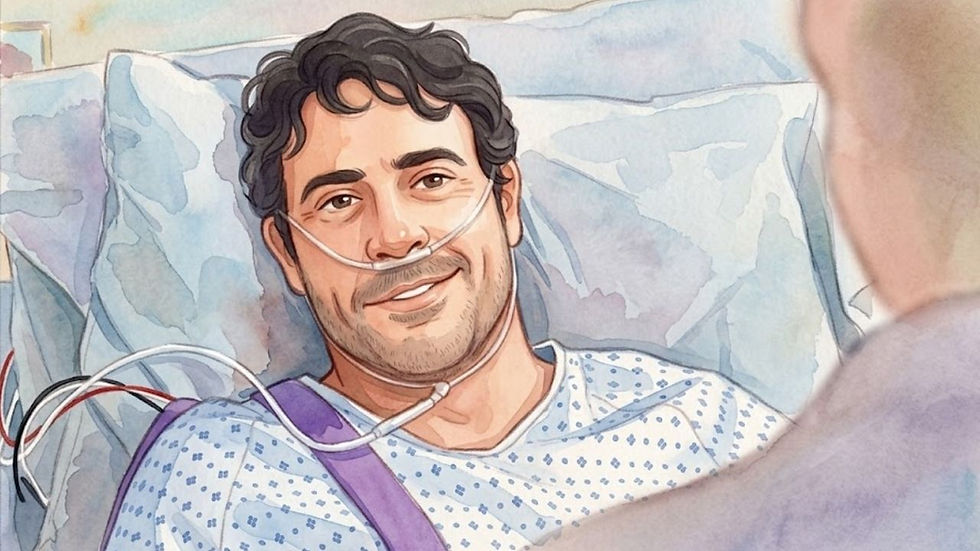
Denny Duquette, Jr.
Case Summary
Denny, a long-term heart patient waiting for a transplant, spent the shift debating the risks and benefits of a portable Left Ventricular Assist Device (LVAD). Despite the risks of the surgery, he ultimately decided to proceed with the placement to improve his quality of life.
Care Team
Dr. Preston Burke (Attending Cardiothoracic Surgeon), Dr. Richard Webber (Chief of Surgery), Dr. Miranda Bailey (Senior Resident), and Meredith Grey (Intern).
Treatment
Placement of a Portable LVAD.
What they did right
Doctors utilized a portable LVAD (Left Ventricular Assist Device) to treat his end-stage congestive heart failure. In modern medicine, LVADs are still a standard "bridge to transplant" or destination therapy for patients with severe heart failure.
What they did wrong
From a professional and ethical standpoint, the treatment was compromised by the inappropriate relationship between the patient and his intern, Izzie Stevens. Denny mentions Izzie promising "sexual favors" to keep him alive, which represents a massive breach of medical boundaries and ethical protocols.

Pacemaker Malfunction and Extraction Complications
Diagnosis
Pacemaker Extraction / Post-Implantation Dissatisfaction.
Definition
A pacemaker is an implanted device that regulates the heart rhythm. Extraction is often required due to infection, lead failure, or vascular occlusion. It is a high-risk procedure because scar tissue (fibrosis) often forms around the leads, making removal dangerous due to the risk of tearing the heart wall or major blood vessels.
Patient
Eugene Foote.
Case Summary
Eugene, a professional violinist, complained that his pacemaker was interfering with his musical "rhythm." After adjustments to the device failed to satisfy him, he insisted on its removal. During the surgery, the presence of significant scar tissue complicated the extraction, leading to his intraoperative death.
Care Team
Dr. Preston Burke and Cristina Yang (Intern).
Treatment
Pacemaker extraction (unsuccessful).
What they did right
Before resorting to surgery, Dr. Burke attempted to adjust the settings on the pacemaker to see if it would resolve the patient’s discomfort.
What they did wrong
The patient requested the removal because he felt the device interfered with his "rhythm" as a professional violinist. Modern medical ethics generally discourage high-risk surgeries (especially extracting leads with significant scar tissue) for purely subjective or artistic reasons when the device is life-sustaining. The patient died during the complicated extraction due to scar tissue.

Congenital Diaphragmatic Hernia

Diagnosis
Congenital Diaphragmatic Hernia (CDH).
Definition
CDH is a developmental defect in the diaphragm that allows abdominal organs (stomach, intestines) to migrate into the chest cavity during fetal development. This occupies space needed for the lungs, causing pulmonary hypoplasia (underdeveloped lungs). Without intervention, the survival rate can be low due to severe respiratory failure after birth.
Patient
Molly Thompson (and fetus).
Case Summary
Molly was transferred to Seattle Grace at 32 weeks pregnant after an ultrasound diagnosed her fetus with CDH. The situation was complicated by the discovery that Molly is Meredith Grey’s half-sister, a fact unknown to Meredith until this shift.
Care Team
Dr. Addison Montgomery-Shepherd (Attending OB/GYN).
Treatment
In-utero tracheal occlusion, specifically, involves inserting a probe into the uterus and inflating a small balloon in the baby’s airway to stimulate lung growth.
What they did right
Dr. Addison Montgomery-Shepherd utilized a minimally invasive fetal surgery to treat a Congenital Diaphragmatic Hernia (CDH). They inserted a probe and inflated a balloon in the baby's airway to stimulate lung growth. This procedure (known today as FETO) is a cutting-edge intervention used in modern maternal-fetal medicine.
What they did wrong
Similar to other cases in this episode, the personal connection (Meredith being the patient's unknowingly related half-sister) created an emotional conflict of interest for the medical staff.

Brain Tumor (Glioblastoma or Similar) Near Broca's Area
Diagnosis
Brain Tumor located near the Language Center.
Definition
Neoplasms located in the dominant hemisphere near the language centers (like Broca’s area) can cause aphasia or language deficits. Surgical resection in these areas requires extreme precision to avoid permanent disability.
Patient
Andrew.
Case Summary
Andrew, a middle-school spelling bee champion, presented with a large tumor. During the resection, the surgical team needed to ensure they weren't damaging his language center.
Care Team: Dr. Derek Shepherd (Attending Neurosurgeon) and Dr. Miranda Bailey.
Treatment
Awake craniotomy with brain mapping. Andrew was awakened during the procedure and asked to spell words (like "acetaminophen" and "omphalocele") to confirm his language functions remained intact as the tumor was removed.
What they did right
To protect his language center during the removal of a large tumor, they performed an awake craniotomy. This is the "gold standard" today; having the patient speak or spell (e.g., "acetaminophen" and "omphalocele") ensures the surgeon does not damage the eloquent areas of the brain.
What they did wrong
During the surgery, they "touched" the language center, causing Andrew to temporarily lose his ability to spell. While this is a known risk of the procedure, it serves as the critical "warning" moment in the mapping process.

Metastatic Cancer with Chest Wall Involvement
Diagnosis
Metastatic Disease (Stage IV Cancer).
Definition
Metastasis occurs when cancer spreads from the primary site to distant organs. Metastatic involvement of the chest wall and bronchi often indicates an incurable stage of the disease. Palliative care focuses on relieving symptoms, such as airway obstruction, rather than curing the underlying cancer.
Patient
Beatrice Carver.
Case Summary
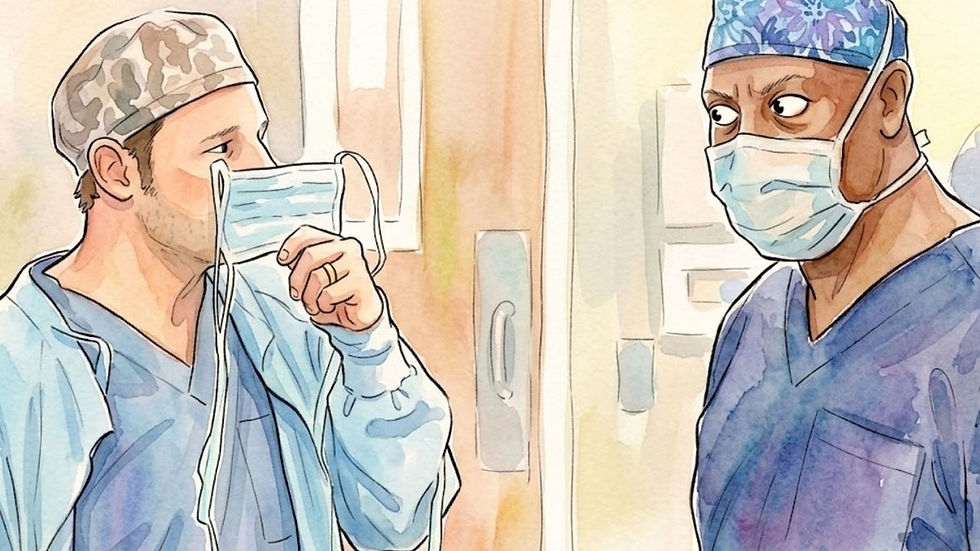
Beatrice had advanced metastatic cancer that had spread to her chest wall. While surgeons were able to debulk a tumor obstructing her airway to help her breathe, they informed her it was not a cure. She struggled with whether to tell her daughter the truth about her terminal status, ultimately deciding to come clean after being confronted about her "protective" lies.
Care Team
Alex Karev (Intern) and Dr. Richard Webber.
Treatment
Palliative endobronchial metastasis extraction.
What they did right
The surgeons performed a procedure to extract a tumor obstructing her airway, which was a successful palliative measure to help her breathe.
What they did wrong
Alex Karev exhibited poor bedside manner and unprofessional behavior by speaking insensitively about her prognosis while she was still on the table, assuming she couldn't hear him. Additionally, he later used "scare tactics" to force her to stay in the hospital after she requested to leave for her daughter's birthday. Modern palliative care emphasizes patient autonomy and compassionate communication rather than coercion.

Multiparity and Elective Sterilization
Diagnosis
Seventh Pregnancy / Multiparity.
Definition
Multiparity refers to having given birth to multiple children. Elective tubal ligation is a permanent form of female sterilization that involves closing or blocking the fallopian tubes.
Patient
Rose Ward.
Case Summary
Rose was in the hospital for a C-section for her seventh child. She requested a tubal ligation but asked that it be performed secretly, without her husband's knowledge.
Care Team
Dr. Addison Montgomery-Shepherd and Alex Karev.
Treatment
C-section delivery and tubal ligation.
What they did right
Performing a bilateral tubal ligation (BTL) during a scheduled C-section is an efficient and standard procedure, as the abdomen is already open.
What they did wrong
The patient requested that the procedure be done "secretly" while she was under for her seventh child. While a patient has the absolute right to her own reproductive choices, performing a "secret" surgical procedure without documenting it clearly or involving the spouse (in a social/ethical context) is often a point of contention in medical dramas, though legally, the patient's consent is all that is required.
Reflex Epilepsy (Seizure Disorder)
Diagnosis
Seizure Disorder (Reflex Epilepsy).
Definition
Seizures are sudden bursts of electrical activity in the brain. Reflex epilepsy refers to seizures consistently induced by a specific environmental or internal stimulus. In Gwen’s case, the stimulus was the stress/sound of interpersonal conflict.
Patient
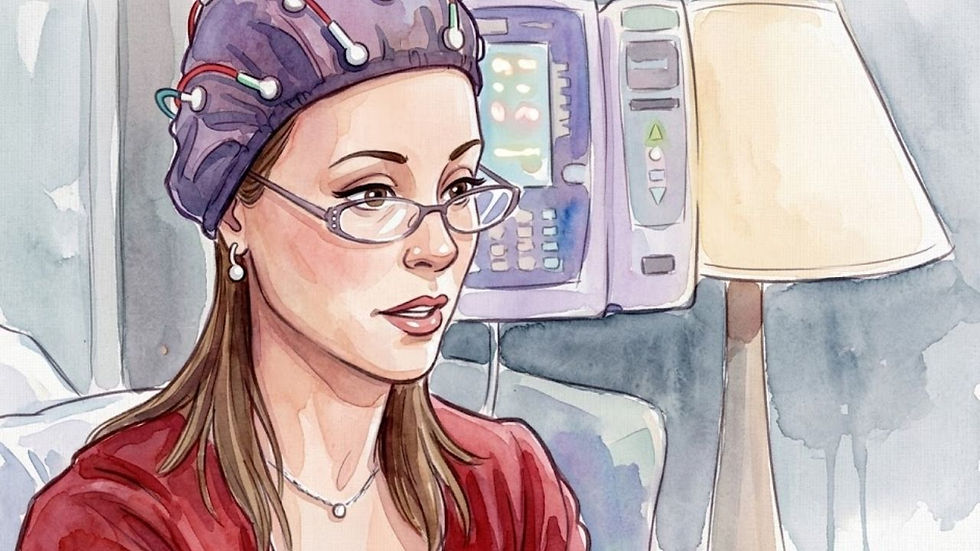
Gwen Graber.
Case Summary
Gwen was hospitalized for brain mapping to identify the source of her seizures. When the team discovered that witnessing people fighting triggered her episodes, she chose to quit her high-stress job rather than undergo invasive brain surgery.
Care Team
Dr. Derek Shepherd, George O'Malley (Intern), and Izzie Stevens (Intern).
Treatment
Brain mapping (diagnostic); patient refused surgery and opted for lifestyle modification.
What they did right
The team used brain mapping to localize the seizure focus. This is a standard procedure in contemporary neurology to determine if a patient is a candidate for resection.
Insight
Interestingly, the diagnosis revealed that social stress (fighting) triggered her seizures. Instead of an invasive surgery to "cut it out," the patient opted for a lifestyle change by quitting her job. This reflects a modern trend toward conservative management when environmental triggers are identified.

Veterinary Emergency (Canine)
Diagnosis
Unknown (Canine illness).
Definition
Symptoms of polydipsia (excessive thirst), lethargy, and vomiting in dogs can indicate various conditions, from diabetes to renal failure or toxicity.
Patient
Doc (the dog).
Case Summary
Doc presented with lethargy, vomiting, and excessive thirst. He was taken to a veterinarian for observation and testing.
Care Team
Dan Dridge (Veterinarian).
Treatment
IV antibiotics and saline drip.
What they did right
When the dog presented with polydipsia (excessive thirst), lethargy, and vomiting, Derek Shepherd did the correct thing by taking him to a veterinarian rather than attempting to treat him with human medications like IV antibiotics. Modern veterinary medicine is a distinct specialty, and human doctors are not licensed to treat animals.

🔖 Key Takeaways
🗝️ Grey’s Anatomy S2E23 Review highlights complex medical cases where clinical decisions are deeply influenced by emotions, relationships, and ethical dilemmas.
🗝️ The episode showcases advanced medical procedures like LVAD placement, fetal surgery (FETO), and awake craniotomy as standards in modern medicine.
🗝️ Surgical ethics play a central role, with multiple cases exposing boundary violations, poor communication, and conflicts of interest.
🗝️ Patient autonomy is emphasized, from refusing risky surgery to making personal reproductive or lifestyle choices.
🗝️ The contrast between life-saving interventions and palliative care underscores the importance of compassionate, patient-centered treatment.
🗝️ Overall, the episode blends medical realism with drama, reinforcing that being a good doctor requires both technical skill and emotional intelligence.
Keywords: Grey's Anatomy S2E23
Grey's Anatomy S2E23



Comments