

The Resident TV Series Medical Review: Metallosis, Cytokine Storm (S2E07 Review)
- Apr 13
- 9 min read

Medical television dramas consistently reach their most compelling narrative heights when they explore the inherent paradoxes of modern healthcare: the chilling reality that the very innovations designed to save or improve our lives can, under the wrong circumstances, become the instruments of our destruction. The seventh episode of this acclaimed series’ second season masterfully highlights this duality, taking viewers on a harrowing journey through the unintended consequences of medical advancement. We are presented with two distinct but equally terrifying medical crises: a beloved community figure being poisoned from the inside out by a trusted surgical implant, and two hopeful patients participating in a cutting-edge clinical trial whose bodies suddenly turn into biological war zones. Without revealing the overarching seasonal plotlines, the complex interpersonal relationships of the staff, or the ultimate destiny of Chastain Park Memorial Hospital’s administration, this review will meticulously dissect the episode's central clinical cases. We will explore the deceptive presentations of toxicological and immunological emergencies, the exhaustive differential diagnoses navigated by the medical team, and the high-stakes, life-saving interventions required when medical science backfires.

Initial Presentation and the Emergency Room Visit
The clinical narrative of this episode is driven by two simultaneous, high-acuity medical emergencies that stretch the hospital’s resources and diagnostic capabilities to their absolute limits. The primary case centers on Ernest "Ernie" LeVasseur, a renowned and beloved local restaurant owner. Ernie presents to the emergency department exhibiting a devastating and confusing array of symptoms that initially masquerade as a rapid-onset neurological collapse. He arrives suffering from profound vision and hearing loss, severe cognitive decline, and a strange, warm rash spreading across his neck. More alarmingly, his vital signs and physical examination indicate that his heart is failing, presenting with acute cardiomyopathy. To the triage nurses and emergency physicians, Ernie looks like a man whose mind and body are concurrently unravelling at an impossible speed.
In a secondary, high-stakes arc, a completely different type of crisis erupts in the hospital’s clinical trial wing. Jessie (the sister of Nurse Practitioner Nic Nevin) and a fellow trial participant, John Losurdo, are hospitalized while undergoing a Phase 1 clinical trial for a revolutionary new immunotherapy cancer drug. Their presentation is not a slow decline, but rather a sudden, explosive physiological crash. Both patients experience rapid, terrifying deterioration characterized by high fever, violent vomiting, severe respiratory distress, and the onset of multisystem organ failure. Their presentation is a textbook "code blue," transforming a controlled, hopeful research environment into a desperate fight for survival as their bodies inexplicably turn against them.

History of Present Illness and Symptoms
In complex medical mysteries, a patient’s history holds the hidden keys to unlocking the diagnosis. For Ernie LeVasseur, his immediate history is one of deep sorrow for his family, who feared he was rapidly losing his mind to an aggressive neurodegenerative disease. However, Dr. Conrad Hawkins, known for his relentless diagnostic intuition, looks past the obvious symptoms of cognitive decline. He digs into Ernie's surgical history and uncovers a crucial, seemingly benign detail: in 2012, Ernie underwent a metal-on-metal hip replacement surgery. This single historical data point fundamentally shifts the investigative paradigm. What appeared to be a psychiatric or purely neurological history was actually a timeline of chronic, insidious toxicological exposure.
For Jessie and John Losurdo, their history is meticulously documented by the nature of the clinical trial itself. As participants in a Phase 1 trial, their medical backgrounds were extensively vetted, meaning their sudden crash could not be easily attributed to undisclosed pre-existing conditions. The defining element of their history is the recent administration of an experimental, unregulated immunotherapy drug designed to hyper-stimulate the immune system to fight cancer. The proximity of the drug infusion to their sudden, violent symptoms points directly to an iatrogenic (medically induced) catastrophe, forcing the physicians to investigate the medication rather than an organic disease process.

The Vast Landscape of Differential Diagnoses
When patients present with multi-systemic failures, the medical team at Chastain must navigate a vast, chaotic landscape of differential diagnoses, ruling out everything from common ailments to catastrophic systemic collapses.
For Ernie, the initial, most glaring suspicion was Early-onset Dementia, a terrifying diagnosis referring to the onset of memory loss and cognitive decline in individuals younger than 65. Because his symptoms were so widespread, the team also had to consider severe endocrine disorders like Hypothyroidism, a condition where the thyroid gland fails to produce enough hormones, which can cause cognitive fog, heart issues, and systemic slowing. The ER staff also had to evaluate his cardiac symptoms to rule out a Myocardial Infarction (heart attack), a sudden blockage of blood flow to the heart muscle causing permanent damage, and other cardiovascular events like Syncope (temporary loss of consciousness due to insufficient blood flow to the brain). They even had to look for mundane but painful issues, assessing abdominal discomfort to rule out Nephrolithiasis (Kidney Stones) or severe Reflux Esophagitis (inflammation caused by stomach acid backflow). Furthermore, the possibility of an Opioid Overdose was kept on the differential, as excessive consumption of pain medication can lead to cognitive changes and life-threatening respiratory depression.
For Jessie and John, the sudden onset of fever, vomiting, and organ failure led the drug company representative to quickly claim the patients were suffering from Sepsis—a life-threatening condition where the body's response to a standard bacterial infection causes systemic inflammation. The team had to vigorously monitor the patients for a progression into Septic Shock, characterized by dangerously low blood pressure and cellular abnormalities. They presented with severe Tachycardia, a heart rate exceeding the normal resting rate, signaling profound physiological distress.
As the hospital managed these central crises, surgical and trauma teams navigated their own treacherous differentials. They monitored patients for severe Muscle and Tissue Atrophy, the wasting away of muscle mass caused by toxic exposure or injury. Orthopedic surgeons evaluated joint degradation, looking for Osteolysis, a pathological process where bone tissue is destroyed, and the formation of Pseudo-tumors, non-cancerous masses of soft tissue that grow as a localized reaction to foreign debris. The vascular team also remained on standby, ready to address any critical Arterial Injury, specifically damage to the exterior iliac artery, which could lead to rapid, fatal blood loss during complex pelvic procedures.

The Definitive Diagnoses: Clinical Clues and Confirmations
The brilliant diagnostic breakthroughs in this episode require the physicians to look beyond the obvious symptoms and challenge the established narratives.
For Ernie, Dr. Hawkins’s suspicion of poisoning leads to specific, targeted heavy metal blood work. The results are horrifying: the cobalt levels in Ernie’s blood are 200 times the normal, safe limit. This confirms the definitive diagnosis of Metallosis (Cobalt Poisoning). His symptoms of dementia, cardiomyopathy, and vision loss were not natural diseases; they were the direct result of heavy metal toxicity crossing the blood-brain barrier and depositing into his cardiac tissue.
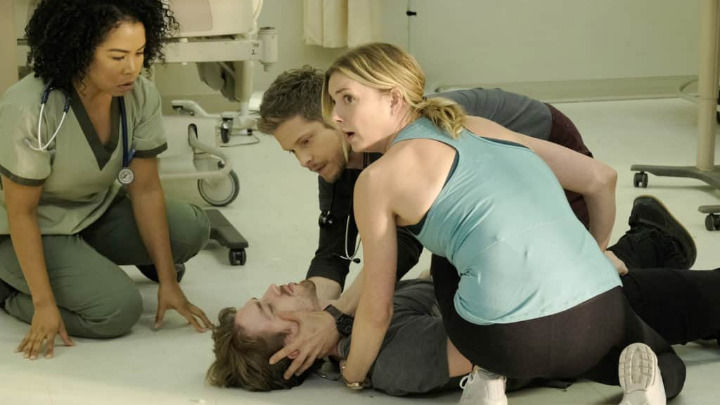
For the clinical trial patients, Dr. Hawkins rejects the drug company's convenient diagnosis of simple sepsis. He recognizes the hyper-acute nature of their multi-organ failure and identifies the true cause: a Cytokine Storm. The experimental immunotherapy drug had not just stimulated their immune systems; it had removed all regulatory brakes, causing their white blood cells to launch a massive, uncontrolled attack on their own healthy organs.
Etymology of the Diagnoses
"Metallosis" combines the word "metal" with the Greek suffix "-osis," denoting a pathological condition or disease process, accurately describing a disease caused by metal debris. "Cardiomyopathy" breaks down into "cardio" (heart), "myo" (muscle), and "pathy" (disease). "Cytokine" comes from the Greek "cyto" (cell) and "kino" (movement), referring to the signaling proteins that move between cells to trigger immune responses. A "storm" vividly describes the violent, uncontrollable cascade of these proteins.
Pathophysiology
The pathophysiology of Ernie’s metallosis is a mechanical failure leading to a toxicological crisis. His 2012 metal-on-metal hip implant consisted of a cobalt-chromium ball rubbing against a cobalt-chromium socket. Over years of normal walking, the friction caused microscopic metal particles to flake off (wear debris). This local debris triggered osteolysis (bone death) and the growth of pseudo-tumors around the hip joint. However, the microscopic cobalt ions also entered his bloodstream, circulating systemically. Cobalt is highly toxic to cellular mitochondria; it poisoned his heart muscle (causing cardiomyopathy), damaged his optic and auditory nerves (causing vision and hearing loss), and crossed into his brain to mimic dementia.
A Cytokine Storm is an immunological feedback loop gone disastrously wrong. When Jessie and John received the immunotherapy drug, their immune cells (T-cells and macrophages) released cytokines to coordinate an attack on cancer cells. However, the drug caused an over-activation, prompting these cytokines to signal for more immune cells, which in turn released more cytokines. This runaway loop flooded their bloodstreams with inflammatory mediators. The resulting massive systemic inflammation caused their blood vessels to become highly permeable (leaky), leading to plummeting blood pressure, fluid filling their lungs (respiratory distress), and the rapid shutdown of their kidneys and liver as their organs were starved of oxygen and attacked by their own immune defenses.
Real-World Epidemiology
Metallosis became a highly publicized real-world crisis in the late 2000s and early 2010s, leading to massive global recalls of metal-on-metal hip implants. Thousands of patients suffered from joint destruction and systemic cobalt toxicity, forcing regulatory agencies to drastically change orthopedic implant standards. Cytokine storms are a well-documented, highly feared complication in modern oncology, particularly with the advent of CAR T-cell therapies and novel immunotherapies. They are also the primary mechanism of death in several severe infectious diseases, most notably playing a major role in the fatalities associated with pandemic respiratory viruses.

Aggressive Treatments and Medical Interventions

The interventions required to save these patients showcase the intense, high-wire nature of modern surgical and pharmacological medicine.
To treat Ernie’s metallosis, the source of the poison must be physically removed. He undergoes a complex, high-risk orthopedic hip revision surgery. The surgeons must carefully navigate around the degraded bone and pseudo-tumors, taking extreme caution to avoid an arterial injury to the exterior iliac artery, which sits dangerously close to the operative field. They successfully extract the defective metal-on-metal implant and replace it with a modern ceramic-on-polyethylene prosthesis. With the cobalt source removed, Ernie’s body will slowly clear the heavy metals from his blood, and he is remarkably projected to make a full recovery, regaining his mind, vision, and heart function over time.
Treating a cytokine storm requires an immediate, massive suppression of the immune system. The medical team treats Jessie and John with aggressive doses of high-dose intravenous steroids. Steroids work to rapidly inhibit the transcription of inflammatory genes, essentially slamming the brakes on the runaway immune response. Tragically, the intervention comes too late for John Losurdo, whose organs had already sustained irreversible damage, resulting in his death. Jessie survives the immediate immunological crisis, but the intense period of low blood pressure and systemic inflammation causes her to develop Acute Kidney Failure. This sudden loss of renal function forces her to be placed on life-sustaining dialysis to artificially filter the waste from her blood while the team waits to see if her kidneys will ever recover.

A Curious Clinical Fact: How a Hip Can Break a Brain
One of the most fascinating and terrifying medical realities highlighted by Ernie’s case is the concept that a mechanical joint in your leg can literally destroy your mind. Cobalt toxicity is a master of disguise. Because cobalt ions can freely cross the blood-brain barrier, they accumulate in the cerebral cortex and hippocampus. Once there, they interfere with cellular respiration and neurotransmitter function. This means that a patient suffering from cobalt poisoning will exhibit symptoms that are virtually indistinguishable from Alzheimer's disease or rapid-onset dementia—memory loss, confusion, mood swings, and cognitive decline. Countless real-world patients have been misdiagnosed with terminal neurodegenerative diseases and placed in memory care facilities, only for doctors to later realize that their "dementia" could be completely cured simply by replacing their artificial hip!

🔖 Key Takeaways
🗝️ Medical implants can cause systemic poisoning: Metal-on-metal joint replacements can shed microscopic cobalt and chromium particles into the bloodstream, causing severe, multi-organ toxicity known as metallosis.
🗝️ Cobalt toxicity mimics dementia: High levels of heavy metals crossing the blood-brain barrier can cause profound cognitive decline, memory loss, and sensory deficits that masquerade as neurodegenerative diseases.
🗝️ Cytokine storms are lethal immune overreactions: A runaway immune response, often triggered by novel immunotherapy drugs or severe infections, causes massive systemic inflammation and rapid, multi-system organ failure.
🗝️ High-dose steroids are the primary defense: To stop a cytokine storm, physicians must administer massive doses of immunosuppressive steroids to rapidly halt the production of inflammatory proteins.
🗝️ Acute kidney failure is a frequent complication of shock: The severe drop in blood pressure associated with systemic inflammation often starves the kidneys of oxygen, leading to acute failure that requires life-saving dialysis.
🗝️ Clinical trials carry immense, unpredictable risks: Phase 1 trials of experimental drugs are designed to test safety, meaning catastrophic, unforeseen reactions like fatal cytokine storms are a genuine, ever-present danger for pioneering patients.
Keywords: The Resident Medical Review S2E07
The Resident Medical Review S2E07



Comments