

Grey's Anatomy TV Series Medical Review (S2E25)
- Mar 29
- 8 min read

Welcome to the front lines, everyone. If you thought your residency was a drama-free zone, you clearly haven’t been paying attention in the elevator. Between the "McDreamy" sightings and the surgical board being backed up for days, it’s a miracle we get any charting done. Today’s shift is brought to you by the letter 'A'—for Adrenaline, Anger, and a healthy dose of Audacity. We’ve got a restaurant shooting that’s turned the pit into a war zone, interns making decisions that would make a lawyer salivate, and enough trauma to keep every OR humming until sunrise. Grab your coffee, try not to fall in love with your patients, and let’s get into the clinical reality of this chaos.

Congestive Heart Failure
(End-Stage Heart Disease)

Diagnosis
Congestive Heart Failure (CHF).
Definition
CHF is a chronic, progressive condition where the heart muscle is unable to pump enough blood to meet the body's needs for blood and oxygen. Common causes include coronary artery disease, hypertension, and valvular disease. Manifestations include dyspnea, fatigue, and peripheral edema. The prognosis varies based on the NYHA functional class, with heart transplantation being the definitive treatment for end-stage cases.
Patient
Denny Duquette, Jr.
Case Summary
Denny was waiting for a donor heart while stabilized by an LVAD. When a heart became available, he was 17 seconds behind another patient on the UNOS list. In a desperate attempt to move him to "Status 1A," his intern cut the LVAD wire to induce a rapid decline.
Care Team
Preston Burke (Attending), Alex Karev (Intern), Izzie Stevens (Intern).
Treatment
Left Ventricular Assist Device (LVAD), attempted heart transplant, and unauthorized manual cessation of the LVAD.
What they did wrong
The most egregious medical and ethical violation was committed by Izzie Stevens, who intentionally cut Denny’s LVAD wire. Her goal was to worsen his condition so that his status on the UNOS transplant list would be upgraded to "1A," allowing him to "steal" a heart intended for another patient. This was a criminal act of intentional harm and a total breach of medical ethics. Additionally, Denny had signed DNR (Do Not Resuscitate) papers, which Izzie emotionally pressured him to ignore, and then proceeded with a plan that would necessitate the very resuscitation he had initially declined.
What they did right
The initial use of a Left Ventricular Assist Device (LVAD) was a standard "bridge to transplant" procedure. In modern medicine, LVADs remain a primary treatment for end-stage heart failure patients waiting for a donor. The medical team also correctly utilized medications like dopamine and dobutamine to stabilize his hemodynamics when they believed his condition was naturally declining.

Brain Death / Penetrating Head Trauma
Diagnosis
Brain Death secondary to Gunshot Wound.
Definition
Brain death is the irreversible cessation of all functions of the entire brain, including the brainstem. It is usually caused by severe trauma or hemorrhage. Manifestations include the absence of brainstem reflexes and spontaneous respiration. Once confirmed, the prognosis is death, though somatic function can be maintained briefly for organ donation.
Patient
Kendra Thomas
Case Summary
A 19-year-old, 12 weeks pregnant, presented with a GSW to the head. Despite emergency surgery to evacuate a hematoma, she suffered brain herniation and was pronounced brain dead. Her parents eventually consented to organ donation.
Care Team
Derek Shepherd (Neurosurgeon), Addison Montgomery-Shepherd (Fetal Surgeon), George O'Malley (Intern).
Treatment
Emergency craniotomy/evacuation of hematoma, life support for fetal incubation (considered but rejected), and organ harvest.
What they did wrong
While the doctors followed standard trauma protocols, the parents’ request to keep Kendra on life support for six months to incubate a 12-week-old fetus was highlighted as medically unfeasible. Addison Montgomery correctly noted that at such an early stage of pregnancy, the risks of infection passing to the fetus and the inability of a brain-dead body to regulate hormones and temperature make it a "very bad idea".
What they did right
The surgical team performed an immediate CT scan and surgery to evacuate a hematoma in an attempt to save her life. Once she was declared clinically brain dead (no spontaneous brain activity), they correctly followed protocol by seeking parental consent to withdraw life support and discussing organ donation, which ultimately could save "dozens of lives".

Gunshot Wound (Thoracic/Shoulder)
Diagnosis
Gunshot Wound.
Definition
A GSW is a form of physical trauma from the discharge of firearms. The severity depends on the projectile's velocity and the structures damaged. Complications include massive hemorrhage, pneumothorax, and lead poisoning. Prognosis is generally good if vital structures are missed and hemorrhage is controlled.
Patient
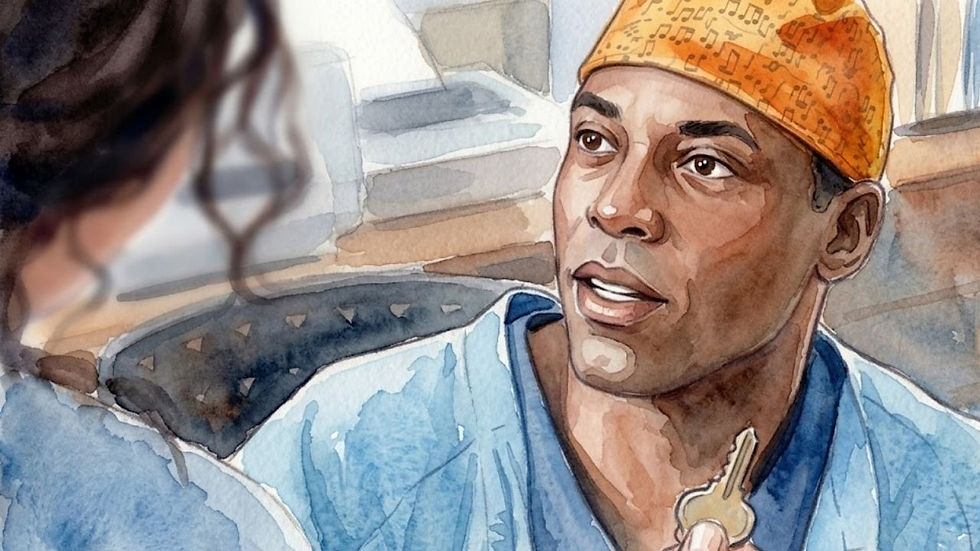
Preston Burke
Case Summary
While returning to the hospital with a donor heart, Dr. Burke was shot in the parking lot by the restaurant gunman.
Care Team
Miranda Bailey (Surgical Resident).
Treatment
Immediate field stabilization and triage by Dr. Bailey.
What they did wrong
Dr. Burke was shot by the gunman while standing outside the hospital during an active shooter situation.
What they did right
Dr. Bailey provided immediate emergency care outside the hospital to stabilize him after the shooting.

Tibia Fracture / Gunshot Wound
Diagnosis
Open Tibia Fracture secondary to Gunshot Wound.
Definition
A break in the larger bone of the lower leg. When caused by a GSW, it is considered an open fracture, increasing the risk of osteomyelitis and compartment syndrome. Treatment typically requires surgical stabilization.
Patient
Will
Case Summary
Will arrived with a ballistic injury to the leg and a deformity indicating a fracture. He required significant analgesia while waiting for the OR.
Care Team
Callie Torres (Ortho Resident), Miranda Bailey (Surgical Resident), Meredith Grey (Intern).
Treatment
ORIF (Open Reduction Internal Fixation) surgery.
What they did wrong
Will’s surgery was significantly delayed because other specialties (Neuro and Cardio) occupied the operating rooms, leading Callie Torres to complain that "every specialty thinks they are more important than Ortho". In modern trauma centers, a gunshot wound to the bone (tibia) is a priority to prevent infection and permanent lameness.
What they did right
The residents correctly followed triage protocols: ruling out other injuries first, using radiology to locate the bullet, and planning for an ORIF (Open Reduction Internal Fixation) surgery to stabilize the bone.
Through-and-Through Gunshot Wound

Diagnosis
Gunshot Wound (Upper Extremity).
Definition
A "through-and-through" wound occurs when a projectile passes entirely through a body part, creating both an entry and an exit wound. While this can avoid "lead-in-body" complications, it still risks neurovascular damage and infection.
Patient
Deborah Fleiss
Case Summary
Deborah was shot in the upper right arm; the bullet passed through her and hit her fiancé, who was hiding behind her.
Care Team
Miranda Bailey, Jeremy Bennett, Cristina Yang.
Treatment
Wound irrigation, X-ray, and tetanus vaccination.

Graze Wound
Diagnosis
Graze Wound (Ballistic).
Definition
A superficial injury where a projectile scrapes the skin without penetrating the underlying tissue. While minor, these require thorough irrigation and tetanus prophylaxis due to the high risk of contamination from the projectile.
Patient
Neal Hannigan
Case Summary
Neal presented with a superficial back wound caused by the same bullet that passed through his fiancée.
Care Team
Miranda Bailey, Jeremy Bennett, Cristina Yang.
Treatment
Wound irrigation, X-ray, and tetanus vaccination.
What they did wrong
Due to the "ER being full," these patients were treated in the hospital hallway. While necessary during a mass casualty incident, this is less than ideal for sterile wound care. Neal also suffered from a graze wound because he used his fiancée as a "human shield" during the shooting, which is a significant social/behavioral issue rather than a medical one.
What they did right
The medical team performed standard emergency wound care: irrigating the wounds, checking distal pulses, performing X-rays to ensure the bullets hadn't hit bone, and administering tetanus shots.
Lacerations / Fatal Gunshot Wound
Diagnosis
Lacerations and subsequent Gunshot Wound.
Definition
Lacerations are irregular, blunt-force tears in the skin. A fatal GSW involves damage to a vital organ (heart, brain, major vessel) that leads to rapid exsanguination or cessation of function.
Patient
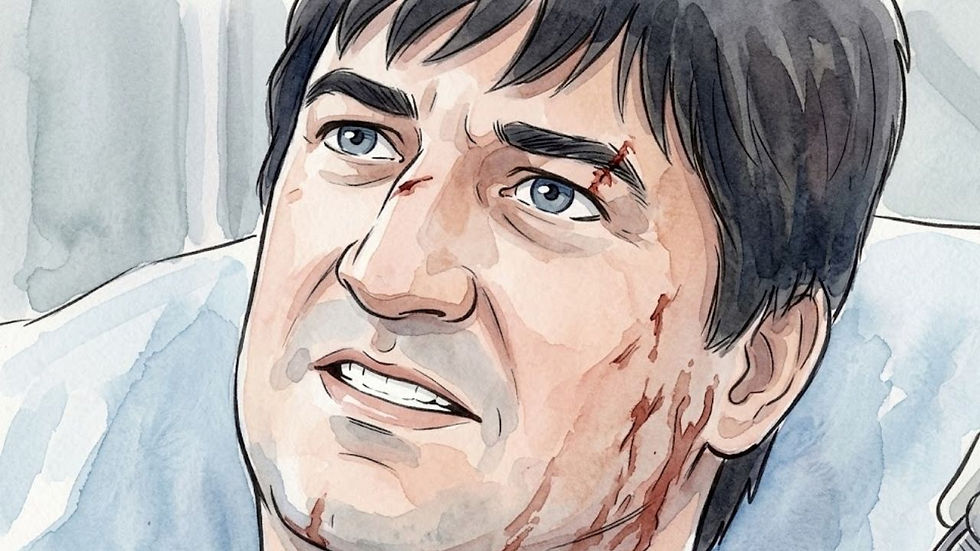
Brad Ackles
Case Summary
Initially treated for glass shards in his arm after jumping through a window, Brad was later shot and killed in the parking lot.
Care Team
Miranda Bailey, Izzie Stevens.
Treatment
Debridement and bandaging for initial injuries.
What they did wrong
Brad was treated for minor lacerations from glass and then was apparently allowed to leave or be in an unsecured area of the hospital parking lot, where the shooter was still at large. This led to him being shot again and killed.
What they did right
His initial treatment involved proper debridement (removing shards of glass) and bandaging.

Brain Death (Traumatic)
Diagnosis
Brain Death secondary to Motor Vehicle Accident.
Definition
(See definition for Kendra Thomas). In this case, the trauma was caused by a high-velocity car collision.
Patient
Case Summary
Two brothers were declared brain dead after an accident. Donor #1’s heart was intended for Denny, but became unviable after the donor suffered V-fib and asystole. Donor #2’s heart became the subject of a dispute between Burke and Hahn.
Care Team
Preston Burke, Erica Hahn.
Treatment
Organ harvest protocol.
What they did wrong
While retrieving the heart for Denny, Donor #1 went into V-fib and asystole. The team attempted resuscitation with "epi" and "shocks," but the heart was declared "useless" because the muscle died.
What they did right
Dr. Burke and Dr. Hahn correctly followed UNOS regulations regarding organ allocation, which is based on precise timing—in this case, the other patient was entitled to the remaining heart because he was entered into the system just 17 seconds before Denny.

Osteosarcoma
Diagnosis
Osteosarcoma.
Definition
A malignant tumor of the bone that is highly aggressive. It most commonly affects the long bones of the arms and legs. Manifestations include localized pain and swelling. It frequently metastasizes to the lungs, leading to a poor prognosis if not caught early.
Patient
Anonymous (Callie’s former patient)
Case Summary
Callie used this human case as a comparison for Meredith’s dog, Doc, noting that the cancer spread to the lungs and the patient died.
Care Team
Callie Torres.
Treatment
Referenced options include chemotherapy, tumor removal, or amputation.
Gunshot Wounds (Minor)
Diagnosis
Gunshot Wounds.
Patient
Chaz and Larry
Case Summary
Two other victims of the restaurant shooting. Larry suffered an arm injury.
Care Team
Not specified.
Treatment
Bandaging.

Constipation (Implied)
Diagnosis
Fecal Impaction / Constipation.
Definition
A solid, immobile bulk of stool that can develop in the rectum as a result of chronic constipation. Manifestations include abdominal pain and the inability to pass stool. Prognosis is excellent with manual or chemical clearance.
Patient
Anonymous OB/GYN patient
Case Summary
A routine patient of Dr. Montgomery-Shepherd who required intern-level intervention.
Care Team
Addison Montgomery-Shepherd, Alex Karev.
Treatment
Enema.

🔖 Key Takeaways
🗝️ Congestive Heart Failure: LVAD use and ethical violations highlight the complexity of end-stage heart disease management.
🗝️ Brain Death: Trauma and GSW cases emphasize adherence to protocols and organ donation ethics.
🗝️ Gunshot Trauma: Multiple patients show triage, emergency stabilization, and OR prioritization in mass casualty events.
🗝️ Surgical Ethics: Decisions like LVAD tampering and DNR breaches underscore the importance of professional integrity.
🗝️ Osteosarcoma & Constipation: Case references provide educational comparisons for interns and patient care.
🗝️ Hospital Chaos: Realistic depiction of emergency medicine challenges, balancing medical, ethical, and emotional pressures.
Keywords: Grey's Anatomy S2E25
Grey's Anatomy S2E25



Comments