

Grey's Anatomy TV Series Medical Review (S3E9)
- Apr 6
- 5 min read

Grab a coffee and find a seat, people. Today’s shift at Seattle Grace was the kind of “dark and twisty” chaos that makes you wonder why we didn't just go into dermatology. Between a car plowing into a local fish market and the personal dramas brewing in the scrub room, the hospital was basically a pressure cooker.
We had a multi-casualty incident that brought in a chaotic mix of trauma: an elderly man who lost control of his vehicle, his wife who seemed suspiciously fine despite the carnage, and a pregnant vegetable vendor who literally flew through a window. Meanwhile, in the quieter corners of the hospital, we were prepping a "VIP" patient—one of our own’s father—for a major cardiac procedure.
Here is the breakdown of the board. Pay attention; there’s a lot of "Science" behind the soap opera.

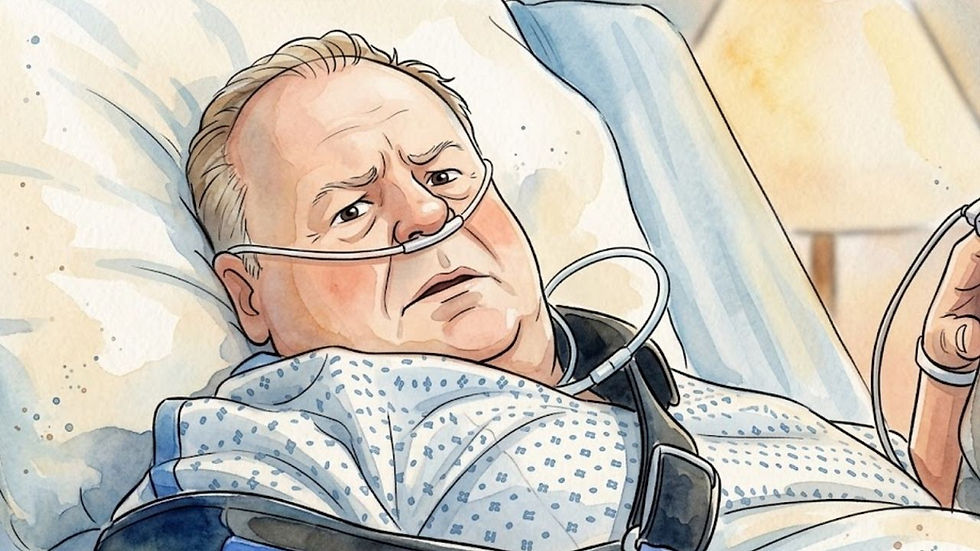
Stage III Metastatic Esophageal Cancer & Leaking Aortic Valve
Diagnosis
Esophageal Carcinoma (Stage III) and Aortic Regurgitation.
Definition
Esophageal cancer involves malignant cells forming in the tissue of the esophagus; Stage III indicates the cancer has spread to the surrounding connective tissue or lymph nodes. A leaking aortic valve (aortic regurgitation) occurs when the heart's aortic valve doesn't close tightly, allowing blood to flow backward into the left ventricle.
Patient
Harold O'Malley.
Case Summary
Harold was admitted for a planned valve replacement. However, the case was complicated by his Stage III metastatic esophageal cancer. The family was caught in a tug-of-war between world-class attendings, eventually choosing to delay the procedure to ensure their preferred surgeon was at the helm.
Care Team
Dr. Erica Hahn (Cardiothoracic Surgery) and Dr. Izzie Stevens (Intern).
Treatment
Originally scheduled for a valve replacement, the surgery was pushed back by the family.
What they did wrong
The primary failure was ethical and administrative. George, a surgical intern and the patient's son, was allowed to influence the choice of surgeons and manage his father’s case, creating a massive conflict of interest. George also knew Dr. Burke had hand tremors, but did not initially prevent his father from requesting Burke for the surgery.
What they did right
Seeking a consultation from Dr. Erica Hahn, a top-tier surgeon from a rival hospital, was a medically sound decision for such a complex case involving both Stage III cancer and a heart valve issue.

Traumatic Cardiac Tamponade & Pregnancy
Diagnosis
Traumatic Cardiac Tamponade.
Definition
This is a life-threatening compression of the heart due to the rapid accumulation of fluid (usually blood) in the pericardial sac, often caused by penetrating trauma. It prevents the heart's ventricles from expanding fully, leading to a dramatic drop in cardiac output and potentially obstructive shock.
Patient
Janelle Duco.
Case Summary
Janelle arrived at the ER covered in blood after a car-versus-market collision sent her through a window. She was 10 weeks pregnant and presented with multiple lacerations and respiratory distress. A chest X-ray revealed a large shard of glass had punctured her heart. During surgery, she was placed on bypass to remove the shard and repair the ventricle. Despite a torn stitch during the first attempt to come off bypass, the team re-heparinized, repaired the heart wall, and successfully stabilized both Janelle and the fetus.
Care Team
Dr. Preston Burke (Cardiothoracic), Dr. Addison Forbes Montgomery (Fetal Surgery), Dr. Mark Sloan (Plastics), Dr. Miranda Bailey (Resident), and Interns Alex Karev, Meredith Grey, and Cristina Yang.
Treatment
Emergency median sternotomy, cardiopulmonary bypass, shard removal, and pericardial patch repair.
What they did wrong
The most significant error was procedural and ethical. Dr. Burke left Janelle on bypass in the middle of heart surgery to assist with another patient, leaving an intern (Cristina) and a resident (Bailey) to manage a critical patient. Furthermore, a suture tore during the process of removing her from bypass, causing a new tear in the heart wall.
What they did right
The doctors correctly identified a traumatic cardiac tamponade caused by a shard of glass puncturing her heart and successfully placed her on bypass to repair the damage while monitoring the 10-week-old fetus.

Aortic Transection, Subdural Hematoma, & Spinal Stenosis

Diagnosis
Traumatic Aortic Transection, Subdural Hematoma, and Spinal Stenosis.
Definition
Aortic transection is a tear in the aorta, typically resulting from rapid deceleration trauma; it is frequently fatal without immediate surgical intervention. A subdural hematoma is a collection of blood between the dura mater and the brain. Spinal stenosis is a narrowing of the spaces within your spine, which can put pressure on the nerves, often causing numbness or weakness in the extremities.
Patient
Larry Shane Dickerson.
Case Summary
The 86-year-old driver who caused the market crash presented with a broken leg, head injury, and air in his mediastinum. Imaging revealed advanced spinal stenosis, suggesting he likely couldn't feel his feet while driving. During a combined neurosurgical and cardiothoracic procedure, a tracheal injury was being addressed when Dr. Hahn discovered a life-threatening tear in the aorta. The team successfully repaired the transection and the head injury.
Care Team
Dr. Derek Shepherd (Neuro), Dr. Erica Hahn (Cardiothoracic), Dr. Preston Burke (Cardiothoracic), Dr. Callie Torres (Ortho), and Dr. Cristina Yang (Intern).
Treatment
Surgery to evacuate the hematoma, repair the tracheal injury, and perform an aortic repair.
What they did wrong
Doctors initially missed an aortic transection while focusing on his tracheal repair. Furthermore, the medical team discovered that Larry suffered from advanced spinal stenosis, which caused numbness in his feet. While not a diagnostic "error" in the hospital, it was a failure of geriatric care that he was still permitted to drive, leading to the accident that injured a dozen people.
What they did right
The team effectively utilized a multidisciplinary approach, coordinating neurosurgery (for the subdural hematoma) and cardiothoracic surgery simultaneously.

Cardiac Arrest
Diagnosis
Sudden Cardiac Arrest (Unspecified Etiology).
Definition
The abrupt loss of heart function, breathing, and consciousness usually results from an electrical disturbance in the heart.
Patient
Unnamed Patient.
Case Summary
A patient presented in the ER in full arrest. Despite aggressive resuscitation efforts by the trauma team, the patient could not be revived.
Care Team
Dr. Preston Burke (Cardiothoracic) and Dr. Meredith Grey (Intern).
Treatment
Attempted ACLS resuscitation and defibrillation; time of death called at 7:53 am.
What they did wrong
While the resuscitation followed standard protocol, the sources suggest that Dr. Burke’s secret hand tremors were present during his work in the ER, potentially affecting his manual dexterity during high-stakes resuscitation.
What they did right
The team followed ACLS (Advanced Cardiac Life Support) protocols, including suction and defibrillation, before calling the time of death.

🔖 Key Takeaways
🗝️ A chaotic multi-casualty incident drives the episode, showcasing high-stakes trauma care and rapid decision-making under pressure.
🗝️ Complex medical cases include cardiac tamponade, aortic transection, and metastatic esophageal cancer with aortic regurgitation.
🗝️ Successful outcomes highlight strong surgical skills, especially in multidisciplinary coordination and emergency cardiac procedures.
🗝️ Critical errors stem from ethical lapses, including conflicts of interest and surgeons operating under compromised conditions.
🗝️ The episode emphasizes the risks of blurred personal-professional boundaries in medicine.
🗝️ Grey’s Anatomy S3E9 balances intense medical realism with emotional storytelling and ethical conflict.
Keywords: Grey's Anatomy S3E9 Review
Grey's Anatomy S3E9 Review




Comments