

Grey's Anatomy TV Series Medical Review (S3E10)
- Apr 6
- 8 min read

Listen up, people. Paging all interns, residents, and attendings who still have a pulse. Welcome to the "Don’t Stand So Close to Me" shift at Grey-Sloan—where the personal space is non-existent and the clinical stakes are higher than the hospital’s overhead.
Today’s board is packed with enough drama to make even the Chief want to retire. We’ve got a patriarch presenting with a history of malignancy and a failing heart that’s rhythmically as confused as an intern on their first day. Down in the OR, we have two adult brothers literally joined at the lumbar region, seeking a life-changing separation that most surgeons wouldn't touch with a ten-foot pole. Meanwhile, over in OB, we’re dealing with an emergency delivery at 36 weeks where the mother is healthy, but the neonate is struggling to take her first breath. And if that’s not enough, we have a world-class cardiothoracic surgeon hiding a persistent hand tremor that’s being "managed" by a surgical intern—talk about a major ethics violation.
Grab your scrub caps. Let's do rounds.

Conjoined Twinship
Diagnosis
Conjoined Twinship (specifically Pygopagus).
Definition
Conjoined twins occur when a single fertilized egg (monozygotic) fails to fully separate during embryonic development. Pygopagus twins are specifically joined at the sacrum and perineum, often sharing portions of the lower spinal cord (cauda equina) and vascular supply. The prognosis for separation surgery depends on the complexity of shared neural and vascular structures; in adults, the risk of paralysis or death is significantly elevated compared to infants.
Patient
Jake and Peter Weitzman.
Case Summary
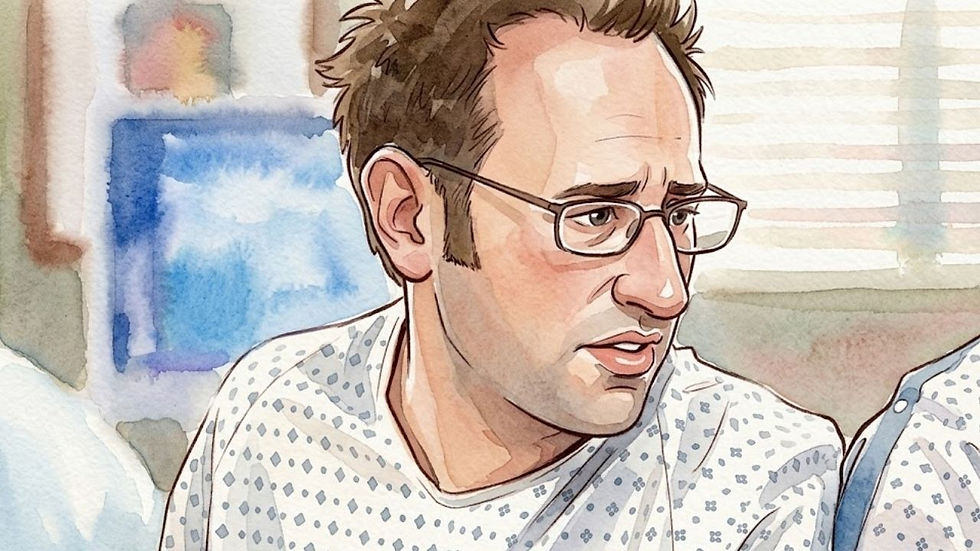
Jake and Peter, 35-year-old brothers, presented for separation surgery after opting out six months prior due to high risks. The catalyst for their return was Jake’s love interest, Helena, though the brothers struggled with the reality of their shared existence and the potential for paralysis. During the procedure, the team faced a delicate "twist" in the nerve cord at the 20A vertebra. After a tense separation involving 22 surgeons, the team successfully confirmed four functional legs and separate bodies.
Care Team
Dr. Derek Shepherd (Neuro), Dr. Mark Sloan (Plastics), Dr. Richard Webber (General), Dr. Miranda Bailey (Resident), and Interns Alex Karev, George O'Malley, and Izzie Stevens.
Treatment
Complex separation surgery involving neurosurgical nerve transfer and plastic surgery skin reconstruction.
What They Did Wrong
Informed Consent and Risk: The surgery carried an extreme risk of paralysis or death due to shared blood flow and fused spinal columns. While the twins consented, the doctors struggled with the ethical dilemma of performing an elective, life-threatening surgery on healthy adults.
What They Did Right
Pre-surgical Modeling: The team used "prototypes" to practice the complex separation, a technique that has evolved today into 3D-printed models and virtual reality simulations for complex surgeries.
Intraoperative Nerve Monitoring: During the surgery, they used a nerve stimulator to check the function of the "cauda equina" and other spinal nerves. Ensuring functional signals in all four legs before finishing the surgery remains a critical standard in modern neurosurgery .

Stage III Metastatic Esophageal Cancer & Aortic Regurgitation
Diagnosis
Metastatic Esophageal Cancer and Aortic Regurgitation (AR).
Definition
Esophageal cancer is a malignancy of the esophagus typically caused by chronic irritation (alcohol, smoking, GERD), with Stage III indicating spread to nearby tissues or lymph nodes. Aortic Regurgitation is a valvular heart disease where the aortic valve doesn't close tightly, allowing blood to flow backward into the left ventricle. This can lead to heart failure and arrhythmias. Porcine (pig) valves are often used for replacement to avoid long-term anticoagulation required by mechanical valves.
Patient
Harold O'Malley.
Case Summary
Harold, 63, was hospitalized for a valve replacement while also battling metastatic esophageal cancer and a healing broken clavicle. Before his scheduled surgery, he became unstable with tachycardia (ventricular tachycardia) and atrial-ventricular fibrillation, requiring emergency intervention with Verapamil and Lidocaine. Despite the intraoperative challenge of a dilating aorta and significant bleeding at the suture site, the team stabilized him.
Care Team
Dr. Erica Hahn (Cardio), Dr. Preston Burke (Cardio), Dr. Callie Torres (Ortho Resident), and Intern Cristina Yang.
Treatment
Porcine valve replacement and emergency pharmacological stabilization for arrhythmias.
What They Did Wrong
Emotional Boundary Violations: George O’Malley, an intern and the patient’s son, was heavily involved in his father's care, leading to constant interference. Dr. Hahn correctly criticized this, noting that in the hospital, he must be a doctor, not just a son.
Incorrect Medical Advice: During a cardiac event, George suggested "massaging the chest" while the patient was in V-fib or ventricular tachycardia, which was inappropriate. He also advocated for Verapamil, which the attending physicians noted would have caused more problems than it solved for his specific tachycardia.
What They Did Right
Pre-operative Monitoring: The team monitored digitalis and potassium levels before surgery, which is standard modern practice to ensure cardiac stability.
Standard Surgical Treatment: The use of a porcine valve replacement for aortic regurgitation remains a standard biological valve option today.
Emergency Intervention: When Harold went into ventricular tachycardia, the team correctly administered Lidocaine to restore a normal heart rhythm, which is a recognized protocol in advanced cardiac life support.

Jejunal Atresia

Diagnosis
Jejunal Atresia.
Definition
A congenital defect where part of the jejunum (the middle part of the small intestine) is narrow or missing, causing a bowel obstruction. It is often caused by a vascular accident in utero. Manifestations include neonatal respiratory distress (due to abdominal distension) and inability to pass stool. The prognosis is generally excellent with prompt surgical intervention.
Patient
Laura Grey-Thompson.
Case Summary
Following her emergency delivery, Laura was born not breathing and non-responsive to stimuli. The surgical team discovered an intestinal obstruction (jejunal atresia) as the source of her distress. She was rushed into emergency surgery, which was successful, and she was subsequently moved to the NICU for recovery.
Care Team
Dr. Addison Forbes Montgomery (Neonatal Surgeon).
Treatment
Emergency abdominal surgery to repair the intestinal atresia.
What They Did Wrong
Conflict of Interest: Meredith Grey was permitted to assist in the C-section of her half-sister, Molly. Modern hospital policies typically discourage or prohibit family members from being part of the direct surgical team for their relatives to avoid emotional bias.
What They Did Right
Emergency Intervention: Performing an emergency C-section at 36 weeks when fetal distress is suspected is standard obstetric practice.
Neonatal Surgical Success: The baby, Laura, was correctly diagnosed with jejunal atresia (an intestinal obstruction) and rushed into surgery immediately. Rapid surgical correction of neonatal bowel obstructions is essential to prevent bowel necrosis and is the standard of care in modern NICUs.

Compressive Hematoma to Brachial Plexus
(Post-Traumatic)
Diagnosis
Compressive Hematoma to Brachial Plexus.
Definition
A collection of blood (hematoma) that puts pressure on the brachial plexus, a network of nerves sending signals from the spinal cord to the shoulder, arm, and hand. This compression can cause motor deficits, such as the "tremor" or loss of fine motor control seen in surgical professionals. Surgical decompression is required to prevent permanent nerve damage.
Patient
Dr. Preston Burke.
Case Summary
Following a previous gunshot wound, Burke developed a secret tremor in his hand, which Intern Cristina Yang helped him hide during surgeries. Chief Webber eventually discovered the tremor and demanded Dr. Shepherd evaluate it. Shepherd identified fibrosis and compression at the injury site. After initial resistance, Burke agreed to let Derek perform the necessary corrective procedure.
Care Team
Dr. Derek Shepherd (Neuro).
Treatment
Surgical decompression of the brachial plexus.
What They Did Wrong
Ethical Malpractice: Burke knowingly operated on patients while hiding a hand tremor caused by a compressive hematoma. This is a severe violation of medical ethics and patient safety.
Complicity: Cristina Yang assisted Burke in hiding the tremor during surgeries, effectively lying to patients and the hospital administration.
What They Did Right
Specialized Neurosurgical Consultation: Once the tremor was addressed, the Chief insisted on a consult with a top neurosurgeon (Derek Shepherd) to find the cause. Seeking highly specialized care for peripheral nerve injuries to the brachial plexus is the gold standard for restoring fine motor function in surgeons or athletes today.

Preterm Pregnancy (36 Weeks)

Diagnosis
Pregnancy at 36 weeks (Preterm Labor).
Definition
A pregnancy is considered "preterm" if delivery occurs before 37 weeks. While 36 weeks is "late preterm" and usually has a high survival rate, complications can necessitate an emergency Cesarean section (C-section) if maternal or fetal distress occurs or if labor cannot be halted pharmacologically.
Patient
Molly Thompson.
Case Summary
Molly was admitted at 36 weeks gestation. Dr. Montgomery attempted to stop her contractions, but the baby was "ready to come out." Due to the urgency, Molly underwent an emergency C-section.
Care Team
Dr. Addison Forbes Montgomery (Fetal Surgeon) and Intern Meredith Grey.
Treatment
Emergency C-section.
What They Did Wrong
Conflict of Interest: Meredith Grey was permitted to assist in the C-section of her half-sister, Molly. Modern hospital policies typically discourage or prohibit family members from being part of the direct surgical team for their relatives to avoid emotional bias.
What They Did Right
Emergency Intervention: Performing an emergency C-section at 36 weeks when fetal distress is suspected is standard obstetric practice.
Neonatal Surgical Success: The baby, Laura, was correctly diagnosed with jejunal atresia (an intestinal obstruction) and rushed into surgery immediately. Rapid surgical correction of neonatal bowel obstructions is essential to prevent bowel necrosis and is the standard of care in modern NICUs.

Alzheimer's Disease
Diagnosis
Alzheimer's Disease.
Definition
A progressive neurodegenerative disease characterized by the accumulation of amyloid-beta plaques and tau tangles in the brain. It leads to severe cognitive decline, memory loss, and personality changes. There is currently no cure, and management focuses on symptomatic treatment and residential care.
Patient
Ellis Grey.
Case Summary
Ellis, a former world-class surgeon, is living with advanced Alzheimer's. In this shift, her daughter Meredith and others continue to grapple with her decline as she remains in a residential facility.
Care Team
Residential care facility staff.
Treatment
Ongoing residential care.
What They Did Wrong
No specific medical error is noted in this episode, though her presence in the hospital highlights the ongoing struggle to manage her care.
What They Did Right
Residential Care: Placing a patient with advanced Alzheimer's in specialized residential care is the standard modern approach to ensure safety and 24-hour support.

🔖 Key Takeaways
🗝️ A high-stakes conjoined twin separation highlights the extreme risks and ethical complexity of elective life-threatening surgeries in adults.
🗝️ Harold O’Malley’s case blends metastatic cancer with cardiac instability, showcasing both correct emergency protocols and dangerous emotional interference.
🗝️ Neonatal jejunal atresia is accurately portrayed, emphasizing the importance of rapid diagnosis and immediate surgical intervention in newborns.
🗝️ Burke’s hidden tremor exposes serious ethical malpractice, reinforcing the importance of transparency and patient safety in surgery.
🗝️ The episode repeatedly demonstrates conflict-of-interest issues, especially involving family members in medical care decisions.
🗝️ Emergency C-section and NICU care reflect realistic obstetric and neonatal practices under pressure.
🗝️ Alzheimer’s care is depicted with realism, focusing on long-term residential management rather than curative treatment.
🗝️ Overall, the episode balances strong medical accuracy with dramatic ethical violations, making it one of the most intense and morally complex installments.
Keywords: Grey's Anatomy S3E10 Review
Grey's Anatomy S3E10 Review



Comments